
The Anatomy of a Gallon: Where Your Money Goes
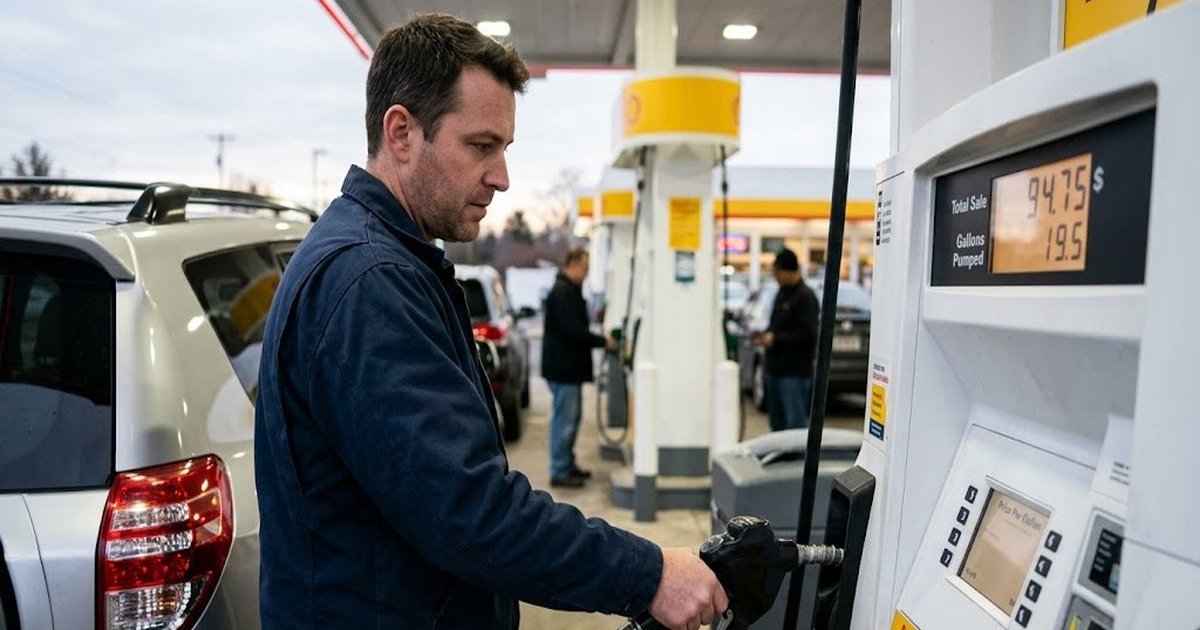
For most Americans, the gas station is the most frequent and visible point of contact with the global economy. When the numbers on the digital marquee tick upward, it feels like a personal tax on our mobility. However, the price you pay at the pump isn’t a single “cost”—it is a complex stack of global commodity trading, industrial chemistry, and local infrastructure. According to the U.S. Energy Information Administration (EIA), the retail price of regular gasoline is generally comprised of four main components: the cost of crude oil, refining costs and profits, distribution and marketing, and taxes.
Historically, crude oil is the heaviest hitter, typically accounting for 50% to 60% of the final price. When Brent Crude or West Texas Intermediate (WTI) benchmarks fluctuate on the global market due to geopolitical tension or production cuts from OPEC+ (the Organization of the Petroleum Exporting Countries and its allies), the impact is felt within days at your local station. In 2023, the EIA reported that crude oil accounted for roughly 57% of the cost of a gallon of gas. The remaining portion is split between refining (18%), distribution and marketing (11%), and taxes (14%). Understanding this breakdown is the first step in moving from frustration to financial awareness.
The Global Ripple: How Crude Oil Dictates Your Budget
Crude oil is a global commodity, meaning the price is set by world supply and demand, not by any single company or country. Even if the United States produces a record amount of oil—as it did in late 2023, hitting an all-time high of more than 13 million barrels per day—domestic prices remain tethered to the global market. If there is a supply disruption in the Middle East or an industrial boom in East Asia, the “world price” rises, and U.S. refiners must pay that higher rate to keep their stock flowing.
For the average household, these macro shifts have a micro impact. The Bureau of Labor Statistics (BLS) notes that energy costs represent a significant portion of the Consumer Price Index (CPI), the most common measure of inflation. When oil prices spike, it creates a “double-whammy” effect. First, it costs more to fill your tank. Second, because almost every consumer good is transported via truck, ship, or plane, the cost of “last-mile” delivery increases. This leads to what economists call cost-push inflation, where the price of groceries and household goods rises to cover the increased logistics expenses. For a family driving 15,000 miles a year in a vehicle that gets 25 miles per gallon, a $1.00 increase in gas prices equates to an extra $600 per year in direct fuel costs alone.
The Refining Bottleneck: From Sludge to Fuel
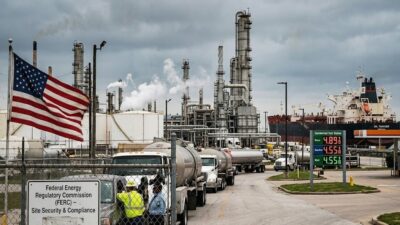
While crude oil is the raw material, you cannot pour it into your engine. It must be processed in a refinery. This is where the “crack spread”—the difference between the price of crude oil and the price of the refined products produced from it—comes into play. In recent years, refining capacity in the U.S. has become a significant price driver. According to data from the National Petrochemical and Refiners Association, the U.S. has lost several million barrels of daily refining capacity since 2020 due to plant closures and conversions to renewable diesel.
Getty Images
When refineries operate at near-maximum capacity, any hiccup—a hurricane on the Gulf Coast or a scheduled maintenance “turnaround”—can cause a localized price spike. Furthermore, the U.S. requires different “blends” of gasoline depending on the season. During the summer, the Environmental Protection Agency (EPA) mandates lower-volatility blends to reduce smog. These summer blends are more expensive to produce and contribute to the annual “spring surge” in prices that consumers often mistake for corporate price-gouging. By the time the industry switches back to winter blends in September, prices often retreat, though this is frequently offset by increased holiday travel demand.
Taxes and the “Last Mile” of Distribution
After gasoline leaves the refinery, it travels through pipelines to terminals, where it is loaded onto tanker trucks for delivery to individual stations. This distribution and marketing phase covers the cost of the truck driver, the insurance for the station, and the “brand” additives (like Techron or V-Power) that companies use to differentiate their fuel. Interestingly, the gas station itself often makes the thinnest margin of all. According to the National Association of Convenience Stores (NACS), most retailers make only a few cents of profit per gallon after credit card fees and operating costs are subtracted. Their real profit comes from the “inside sales”—the coffee, snacks, and lottery tickets you buy when you step away from the pump.
Then there are the taxes. The federal gas tax has remained frozen at 18.4 cents per gallon since 1993. However, state taxes vary wildly. According to the American Petroleum Institute (API), as of early 2024, California residents paid upwards of 77 cents per gallon in state taxes and fees, while drivers in Alaska paid less than 15 cents. This geographic disparity explains why crossing a state line can sometimes save you $5.00 on a full tank. For personal finance planning, it is vital to recognize that these taxes are “regressive,” meaning they take a larger percentage of income from low-earning households who cannot easily switch to electric vehicles or telework.
Strategic Spending: Navigating High-Fuel Environments
So, what does this mean for your wallet? Since you cannot control OPEC+ or refinery maintenance schedules, focus on the variables you can influence. First, leverage “loyalty arbitrage.” Most major chains offer rewards programs that can shave 5 to 10 cents off a gallon. When combined with a credit card that offers 3% to 5% cash back on fuel, the effective price per gallon can drop significantly. Second, understand the “Monday Myth.” While it is a common trope that gas is cheaper on certain days, data from GasBuddy suggests that while there is some variance, the most impactful habit is avoiding stations directly off major highway exits, which often carry a “convenience premium” of 20 cents or more.
On a broader level, gas prices should dictate your “emergency fund” elasticity. Because fuel is a non-discretionary expense for most—you must get to work—a 20% spike in gas prices acts as an immediate reduction in your disposable income. If you spend $200 a month on gas, a significant price jump might require an extra $40. If your budget is tuned to the penny, that $40 often comes out of your savings or high-interest debt payments. By treating gas as a “fluctuating fixed expense,” you can build a small buffer in your monthly budget to absorb these global shocks without derailing your long-term financial goals.
Frequently Asked Questions
Why do gas prices stay high even when oil prices start to drop?
This phenomenon is often called “rockets and feathers”—prices go up like a rocket when oil spikes but drift down like a feather when oil drops. Retailers are often slow to lower prices because they want to recoup the cost of the expensive fuel already in their underground tanks and hedge against future volatility.
Does the President of the United States control the price of gas?
While presidents can influence prices marginally through the Strategic Petroleum Reserve or diplomatic pressure on oil-producing nations, they do not have a “dial” for gas prices. Global supply, refinery capacity, and consumer demand are the primary drivers, far outweighing any single domestic policy in the short term.
Is “Premium” gas better for my car’s fuel economy or the environment?
Unless your vehicle’s manual specifically requires or recommends high-octane fuel for its high-compression engine, using premium is essentially throwing money away. It does not provide more energy per gallon or “clean” the engine better than regular gas from a reputable station that meets “Top Tier” detergent standards.
This article was produced with AI assistance and reviewed by a human editor for accuracy and clarity. For more about our editorial standards, visit our About page.