

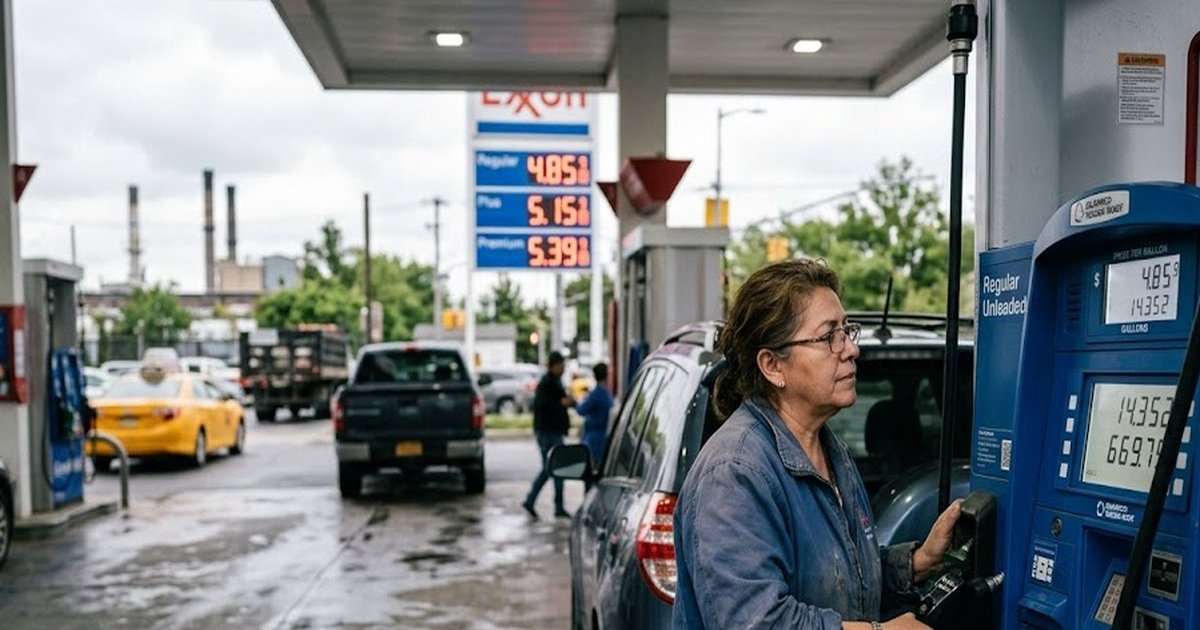
The Mystery at the Gas Pump
Every time you fill up your gas tank, you watch those numbers climb. It’s a normal part of your weekly routine, right? But let’s be honest, it can also be seriously stressful.
You probably wonder where all your hard-earned money is going. Gas prices can feel like a total enigma, jumping overnight or slowly creeping up for weeks. The truth is, there’s a lot of data and clear facts behind these changes.
As of March 2026, the national average for a gallon of regular gas is hovering around $2.99, according to AAA. That’s a good starting point to look at the bigger picture.
Let’s break down exactly what you’re paying for at the pump. We’ll look at the real numbers and see what these trends mean for your wallet.
The Four Pieces of the Gas Price Puzzle
When you swipe your card at the gas station, your money doesn’t just vanish. It’s divided into four different buckets. It’s not just one big fee, you see.
The first, and biggest, bucket is always crude oil. That’s the raw, dark liquid pulled from the ground. The U.S. Energy Information Administration says that global crude oil makes up the single largest part of American gasoline prices.
The second bucket is refining. Crude oil isn’t exactly something your car engine can handle. It needs to be sent to a massive refinery.
The refinery basically cooks and treats the oil to turn it into liquid gasoline. It’s a complex process that requires a ton of machinery and power.
The third bucket covers distribution and marketing. Gasoline has to get from the refinery to your local gas station.
That involves pipelines, large storage tanks, and delivery trucks. Plus, the local gas station owner takes a small cut just to keep the lights on. Think about that.
The fourth bucket? Taxes. Both the federal government and your state government collect taxes on every single gallon you buy.
Why Crude Oil Rules the Market
If you really want to understand gas prices, you have to understand crude oil. The price of oil changes every day on the global market.
Oil prices bounce up and down based on global supply and demand. When countries pump more oil than people need, prices drop. But if there’s a threat to oil production, prices skyrocket.
Classic misdirection. This means events happening halfway across the world can affect your morning commute. Because of the global nature of oil, local leaders just can’t easily fix gas prices.
But, there’s some good news for your budget. American driving habits are changing in a way that helps keep prices down. (It’s a small win, anyway.)
Joe DeCarolis, Administrator of the U.S. Energy Information Administration, noted this shift in fuel demand. “U.S. motorists are using less gasoline than they did before the pandemic, and we expect that to help keep gasoline prices from climbing with oil prices,” DeCarolis said.
When we use less gas overall, it takes pressure off the market. No kidding, U.S. retail gasoline prices dropped in 2024 and again in 2025, according to the U.S. Energy Information Administration.
The Geography of Gas Prices
You’ve probably noticed that gas prices change when you cross state lines. Sometimes, the difference is jaw-dropping.
In 2025, the average retail price for gas ranged from $2.39 per gallon on the Gulf Coast to $4.32 on the West Coast, according to the U.S. Energy Information Administration.
That’s nearly a two-dollar difference per gallon! The reason comes down to location, rules, and state taxes.
The Gulf Coast is packed with large oil refineries. Gas doesn’t have to travel far to reach stations in Texas or Louisiana. Shorter travel means lower delivery costs.
The West Coast is a different story. California requires a special blend of gasoline to reduce smog. That clean blend costs much more to make.
State taxes also play a huge role in your final bill. The federal gas tax is 18.4 cents per gallon, but state taxes vary wildly.
Some states charge less than 20 cents in tax. Others charge well over 60 cents per gallon. When your state charges higher fuel taxes, you pay more at the pump, plain and simple.
Why Gas Costs More in the Summer
You might notice gas prices usually rise in the spring and summer. It’s a pretty normal cycle – happens almost every year.
The main reason? The busy summer driving season. Families take road trips, people head to the beach. This causes a massive spike in demand.
But there’s another, hidden reason. The fuel itself actually changes with the seasons.
In the spring, refineries switch to a “summer blend” of gasoline. This special blend stops fuel from evaporating in the hot sun—evaporating fuel causes nasty air pollution.
The summer blend is better for the air, but it’s harder and more expensive to make. Refineries even have to briefly pause work to make the switch.
Finally, combine your weekly errands. Instead of three short trips, do all your shopping in one loop. This saves both time and fuel.
The Road Ahead
Gas prices will always go up and down. It’s just the nature of the energy market.
Understanding how prices work gives you peace of mind. You now know that crude oil, refining, delivery, and taxes make up the cost.
By tracking your own monthly spending, you can plan your budget. And you can make smart choices about when and how you drive.
Frequently Asked Questions
What makes up the biggest part of the price of a gallon of gas?
Crude oil is the largest single cost in a gallon of gas. According to the U.S. Energy Information Administration, global crude oil prices drive the final cost you see at the local pump.
Why are gas prices higher in the summer?
Gas prices rise in the summer due to increased travel demand and a change in fuel rules. Refineries must switch to a cleaner “summer blend” of gas, which costs more money to produce.
How much does the average person spend on gas each month?
In 2024, the average American household spent $201 per month on gasoline. According to the Bureau of Labor Statistics, this equals roughly 3.1% of a family’s total yearly budget.