

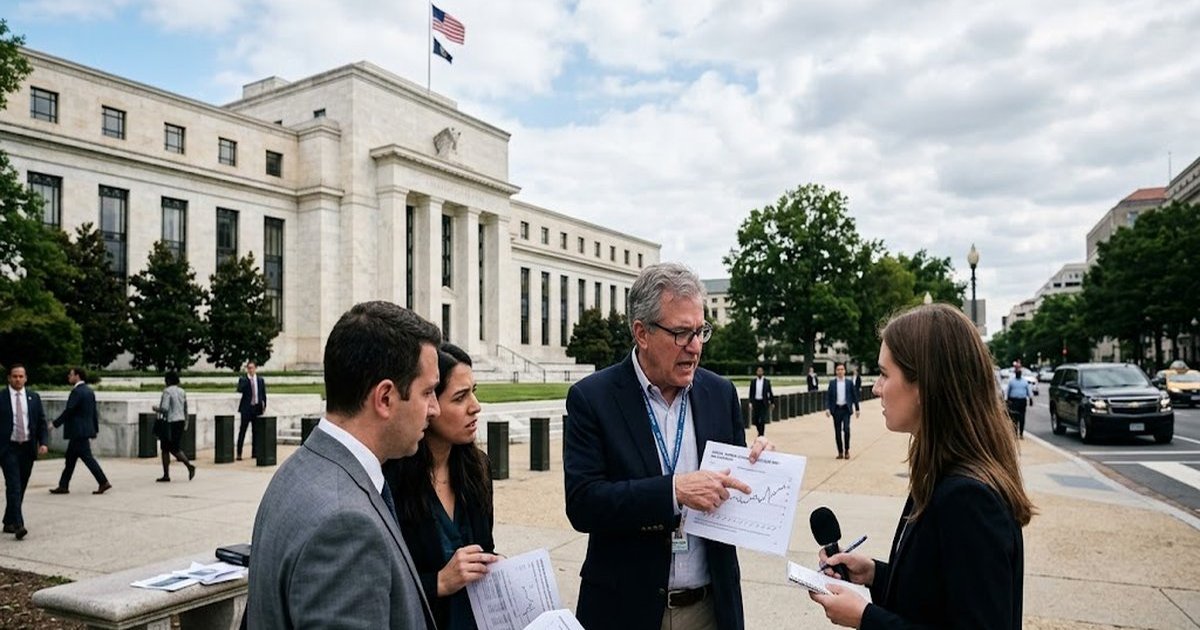
The Experts Are Missing the Mark
You work hard for your money. You budget, you save, and you pay your bills. But lately, it feels like you just cannot get ahead.
You are not doing anything wrong. The problem is bigger than your personal bank account. The people in charge of our money supply are making mistakes.
The Federal Reserve is the central bank of the United States. Their main job is to keep prices stable and maximize employment. But over the last few years, they have struggled to do either.
They promised us that rising prices were just a temporary glitch. They told us things would go back to normal. They were wrong.
Now, everyday Americans are paying the price. Your grocery bills are higher. Your auto insurance costs more. Your credit card interest rates are through the roof.
We need to talk about why the Federal Reserve keeps getting it wrong. More importantly, we need to talk about what this means for your wallet.
The “Transitory” Trap That Cost You Money
Let us go back a few years. When prices first started going up, the Federal Reserve told us not to worry. They used a fancy word: “transitory.”
They meant that the inflation was temporary. They thought it would pass quickly once the world went back to normal. Because they believed this, they waited to take action.
That waiting period was a massive mistake. Prices kept climbing. The cost of everything from eggs to used cars shot up.
Finally, the experts had to admit they made a mistake. In late 2021, Federal Reserve Chair Jerome Powell said, “I think it’s probably a good time to retire that word.”
He was talking about the word “transitory.” But the damage was already done. Inflation had taken root in the economy.
When the Federal Reserve gets things wrong, it is not just an academic debate. It hits your kitchen table. It means the dollars in your purse buy less than they did before.
If they had acted sooner, prices might not have spiked so high. Their mistake drained your purchasing power. It made everyday life much more expensive.
The National Debt Problem We Cannot Ignore
The Federal Reserve does not act alone. They are part of a massive system. That system includes the federal government, which loves to borrow money.
Our national debt is growing at a scary pace. According to the U.S. Treasury Department, the gross national debt hit 38.86 trillion dollars in March 2026.
That number is so big it is hard to understand. But you need to know why it matters to you. When the government borrows more money, it affects the whole economy.
The government has to pay interest on that massive debt. To attract lenders, they have to offer competitive interest rates. This pushes up interest rates for everyone else.
When the government pays more to borrow, you pay more to borrow. This makes mortgages more expensive. It makes car loans harder to afford for normal families.
The Federal Reserve is stuck in the middle. They try to manage the economy. But the government keeps spending money it does not have.
This massive debt creates inflation pressure. More money is printed to cover the gaps. That makes every dollar you have worth a little bit less.
Why the Fed’s Tool Fails to Fix Main Street
When inflation gets too high, the Federal Reserve uses its main tool. They raise interest rates. This is supposed to cool down the economy.
The idea is simple. If it costs more to borrow money, people will spend less. If people spend less, businesses will lower prices to attract buyers.
But there is a major flaw in this plan. Raising interest rates is a blunt tool. It does not fix the real reasons why your life is more expensive.
Higher interest rates do not create more houses. They do not drill more oil for gasoline. They do not grow more food on farms.
In fact, higher interest rates make it harder for businesses to expand. A farmer pays more to finance a tractor. A builder pays more to finance a new housing project.
Those businesses pass their higher costs on to you. So, the Federal Reserve tries to fight inflation by raising rates. But those high rates actually make some things more expensive.
This is why you feel stuck. The experts pull a lever in Washington. But the results on Main Street do not match their textbooks.
The Reality of Current Prices
The Federal Reserve likes to point out that inflation is slowing down. But slowing down is not the same as going backward. Prices are still rising.
According to the Bureau of Labor Statistics, the Consumer Price Index rose 2.4 percent over the 12 months ending in February 2026.
That might sound like a small number. The news anchors might cheer for it. But remember, that increase is piled on top of massive price hikes from the last few years.
Things are even worse at the grocery store. The same report from the Bureau of Labor Statistics found the food index increased 3.1 percent over the last year.
Prices are not dropping. They are just growing a little slower than they did before. Your grocery bill is still much higher than it was four years ago.
This gap between the expert data and your reality is huge. It causes stress for millions of families. People are worried about their future.
A 2025 Northwestern Mutual Planning and Progress Study found that 65 percent of U.S. adults say inflation is the dominant concern that could impact their finances.
That is a clear message. Americans are still feeling the pain. The Federal Reserve might think the job is done. But the people buying groceries know the truth.
Why Government Spending Makes It Harder
We must also look at how Congress makes the Federal Reserve’s job harder. It is a two-part problem that impacts your wallet directly.
The Federal Reserve controls the money supply. But Congress controls how much the government spends. Right now, they are working against each other.
The Federal Reserve is trying to pull money out of the economy. They want to slow down inflation. But the government keeps pumping money in.
Every time Congress passes a massive spending bill, it floods the system with cash. This creates more demand for limited goods and services.
When demand goes up, prices go up. This cancels out the hard work you are doing to balance your own household budget.
Imagine trying to cool down a hot room by turning on the air conditioner. But at the same time, someone else is leaving the furnace on high.
That is what is happening to our economy. The Federal Reserve is the air conditioner. The federal government is the furnace.
You are trapped in the room, paying the energy bill for both. This is why you must protect your own money first.
What This Means for Your Family Budget
We have talked about the experts, the debt, and the data. Now let us talk about your daily life. What do these Federal Reserve mistakes mean for you?
First, it means your credit cards are dangerous right now. When the Federal Reserve raised rates, credit card companies followed right along.
If you carry a balance from month to month, you are paying a huge penalty. The interest charges will eat up your budget faster than ever before.
Second, it means your cash savings are losing value. Even if your bank pays you a nice interest rate, inflation is likely eating those gains.
If your savings account pays four percent, but food costs go up five percent, you are still falling behind. Your money buys less over time.
Third, it means large purchases are much harder to manage. Buying a home or replacing a broken car is a massive burden with today’s interest rates.
The system is currently set up to squeeze the middle class. The people who make the rules do not feel the pinch like you do.
When the Federal Reserve gets the math wrong, they just rewrite their forecasts. When you get the math wrong, you cannot pay your power bill. The stakes are very different.
How to Protect Your Money Moving Forward
You cannot control the Federal Reserve. You cannot fix the national debt yourself. But you can control how you manage your own money.
You need to play defense. Start by looking closely at your monthly spending. Find the leaks in your budget and plug them.
Cancel subscriptions you do not use. Shop around for cheaper car insurance. Every twenty dollars you save is money you keep away from inflation.
Next, attack your high-interest debt. Make credit card balances your public enemy number one. Pay more than the minimum payment every single month.
If you have money in a regular bank account, move it. Look for a high-yield savings account. You need your money to earn the highest interest possible right now.
Do not wait for Washington to fix the economy. The experts will continue to debate their data. You need to focus on protecting your family.
Be a smart shopper. Buy store brands instead of name brands. Plan your meals around what is on sale at the local grocery store.
Most importantly, stay educated. Keep reading and learning about how money works. When you understand the rules of the game, you can make better choices.
The Bottom Line on the Fed
The Federal Reserve is run by smart people. But economics is not a perfect science. It is full of guesses and human errors.
They missed the warning signs of inflation. They waited too long to act. They rely on tools that hurt everyday people.
You are right to feel frustrated. The economy you live in does not match the sunny reports on the evening news.
By understanding why the Federal Reserve gets it wrong, you take your power back. You are no longer just reacting to their mistakes.
You can adjust your budget. You can aggressively pay down debt. You can find ways to protect your hard-earned dollars.
Keep your focus on what matters. Ignore the jargon. Track your spending, guard your savings, and build a financial fortress for your family.
Frequently Asked Questions
What is the Federal Reserve?
The Federal Reserve is the central bank of the United States. They manage the country’s money supply and set interest rates to help control inflation.
Why do interest rates affect my credit cards?
Credit card companies base their rates on the numbers set by the Federal Reserve. When the central bank raises rates, your credit card company charges you more interest on your balances.
Will prices ever go back down?
Prices rarely go back to where they were in the past. When experts say inflation is slowing down, it just means prices are rising at a slower pace than before.