

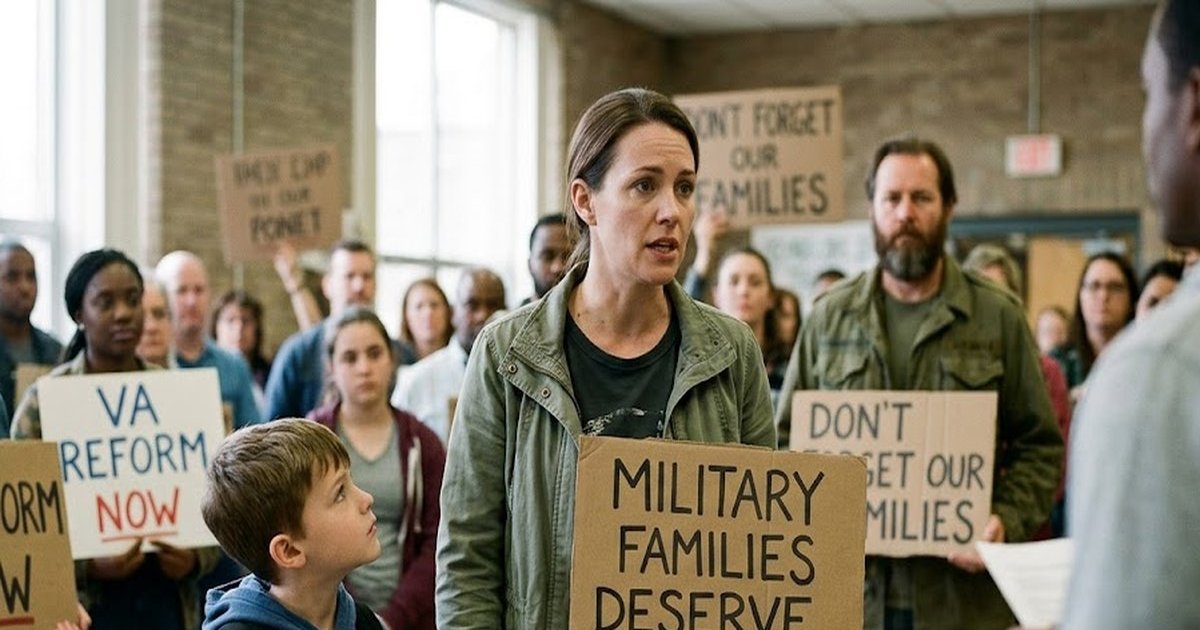
A Promise Made, A Promise Broken
When a young man or woman raises their right hand and swears an oath to defend the Constitution of the United States, our nation makes them a solemn promise in return. We promise that if they are injured, if they bear the physical or invisible scars of war, we will take care of them. But there is an unspoken second half to that promise: we will also take care of their families. For too long, the Department of Veterans Affairs (VA) has operated as a massive, unaccountable bureaucracy that leaves everyday American families fighting a second war right here at home—just to get the benefits they have rightfully earned.
As conservative women, wives, mothers, and daughters, we are often the ones holding the fort. We manage the household when our spouses deploy, and we become the primary caregivers, researchers, and advocates when they return home wounded. We sit on hold with the VA for hours. We fill out the endless stacks of paperwork. We watch the men and women we love struggle with a government system that too often treats them like a number on a spreadsheet rather than an American hero.
It is time to have a frank, factual conversation about the VA reform fight. We need to look past the political talking points and examine the real numbers, the real budget, and the real impact on our family values. The status quo is unacceptable, and our military families simply deserve better from the nation they served.
A Skyrocketing Budget and Bureaucratic Bloat
If you listen to the mainstream media, you might believe that the VA is chronically underfunded and just needs a little more of your tax money to finally get things right. The facts tell a very different story. The Department of Veterans Affairs operates with a staggering amount of taxpayer money. According to the Congressional Budget Office (CBO) and the VA’s own budget submissions, the total budget request for Fiscal Year 2024 was an eye-watering $325.1 billion. By Fiscal Year 2025, that total budget ballooned even further to $368 billion.
To put that in perspective, the VA budget has increased by more than 60 percent since 2019 alone. We are fully funding the operation of the largest integrated healthcare system in the United States, supporting over 9.2 million enrolled veterans. Yet, despite this massive infusion of cash, wait times remain a critical issue, and facilities across the country continue to suffer from mismanagement and neglect.
Where is all this money going? While frontline doctors and nurses do incredible work under immense pressure, a significant portion of the budget is swallowed by middle management, administrative overhead, and bloated IT modernization contracts that consistently fail to deliver results. For everyday Americans trying to balance their own checkbooks and deal with inflation, seeing the government mismanage $368 billion is infuriating. We believe in strict government accountability. If we are spending over a third of a trillion dollars on veterans’ care, our veterans should be receiving VIP, concierge-level medical treatment. Instead, they are forced to navigate a dizzying maze of red tape.
The Truth About the “Shrinking” Claims Backlog
In early 2025, the VA proudly announced what it called a historic milestone: a 57 percent drop in its disability claims backlog. On the surface, this sounds like a massive victory. Politicians patted themselves on the back, and press releases were issued declaring that the days of veterans waiting years for a decision were finally coming to an end.
But as conservatives, we know to look beneath the surface of government statistics. According to a 2025 analysis by Chisholm Chisholm & Kilpatrick (CCK Law), one of the nation’s leading veterans law firms, this dramatic reduction in the backlog came at a severe cost to accuracy. In the rush to clear the queue and produce favorable headlines, thousands of disability claims were reportedly rubber-stamped without proper, thorough review.
Speed does not equal accuracy. When a claim is rushed and wrongly denied, or when a rating is incorrectly reduced, the burden falls squarely on the veteran’s family. It means the wife has to spend her evenings gathering medical records, filing appeals, and fighting the federal government all over again. High-volume processing without quality control isn’t a solution; it is just kicking the can down the road and creating a future appeals nightmare. Our veterans don’t just need fast decisions—they need accurate, lawful decisions that honor their service and properly compensate them for their injuries.
The Reality of Transitioning to Civilian Life
The failure of the bureaucracy has real, heartbreaking consequences for families in our communities. When the VA drops the ball, the family has to catch it. The transition from military service back to civilian life is a deeply vulnerable period, and the data proves just how difficult it can be for our heroes.
A comprehensive study by the Pew Research Center revealed that roughly half of all post-9/11 veterans say it was somewhat or very difficult for them to readjust to civilian life. The challenges are not just emotional; they are intensely practical. The same Pew Research data shows that 35 percent of veterans had trouble paying their bills in the first few years after leaving the military. Furthermore, one-in-five male veterans reported struggling with substance abuse after their service ended.
Behind every single one of these statistics is an American family. There is a spouse trying to make ends meet, a mother worrying about her son’s mental health, and children who just want their parent back to their old self. When the VA makes it difficult to access mental health care, or delays the disability compensation that a family desperately needs to pay the mortgage, it undermines the very foundation of the American family. We believe in strong families and strong communities, but an inefficient government is making it harder for our military families to thrive.
Community Care: A Lifeline Under Attack
One of the most significant conservative victories for veterans in recent history was the VA MISSION Act of 2018. This legislation recognized a fundamental constitutional principle: individual liberty and medical freedom. It gave veterans the freedom to seek care from private doctors in their own communities if the VA couldn’t see them in a timely manner or if they lived too far from a facility.
The Veterans Community Care Program has been an absolute lifeline, particularly for families living in rural America where the nearest VA hospital might be hours away. According to the CBO and VA budget estimates, reliance on this program has grown tremendously, accounting for roughly 25 percent of the entire Veterans Health Administration (VHA) medical care budget by 2024.
Veterans love the Community Care program because private-sector healthcare works. It offers faster appointments, specialized care, and the dignity of choice. However, Washington bureaucrats hate it. Instead of embracing the free market and allowing veterans to choose their doctors, the administrative state has continuously tried to rein in the program. Bureaucrats want to pull veterans back into the government-run system to justify the existence of their empty buildings and massive budgets.
We must fight to protect and expand Community Care. Forcing a wounded veteran to drive three hours to a government facility when there is a perfectly capable private doctor five minutes down the road is not just inefficient; it is an insult to their service. Healthcare decisions should be made between a veteran, their family, and their doctor—not dictated by an unelected government administrator in Washington, D.C.
The Path Forward: Accountability and Constitutional Principles
Reforming the VA is not just a policy debate; it is a moral imperative. As conservative women, we must use our voices, our votes, and our community networks to demand better for our military families. We must insist on a system built on accountability, transparency, and respect for the individual.
- Audit the Budget: Congress must conduct rigorous, independent audits of the VA budget. We cannot continue to pour $368 billion into a broken system without demanding measurable results and penalizing failure. Middle management needs to be trimmed, and those resources must be redirected to frontline care.
- Expand Free-Market Solutions: We must demand permanent protections for the Community Care program. No veteran should ever be trapped on a government waitlist when private care is available. The free market provides better, faster, and more efficient healthcare.
- Support the Family Unit: We must continue to support the spouses and families who bear the brunt of these bureaucratic failures. The family is the bedrock of our republic, and military families are the steel framework that keeps us safe.
The fight to reform Veterans Affairs is a fight for the soul of our nation’s commitments. It is a fight against big government and for the individual. We have the facts, we have the resolve, and together, we can ensure that our nation finally keeps its promise to the men, women, and families who sacrificed everything for our freedom.
Frequently Asked Questions
What is the current budget for the Department of Veterans Affairs?
The VA budget has grown significantly in recent years, reaching an astounding $368 billion for Fiscal Year 2025. Despite this massive influx of taxpayer funds, the agency continues to struggle with bureaucratic bloat and inefficiencies. This proves that simply throwing money at a government problem does not guarantee our veterans receive timely, world-class care.
How does the Veterans Community Care Program work?
Established by the MISSION Act, this program allows eligible veterans to receive healthcare from private, community-based providers rather than waiting for a VA facility appointment. It is designed to ensure veterans get timely and accessible care, especially in rural areas. Unfortunately, Washington bureaucrats continually attempt to restrict this free-market option to keep veterans trapped in the government system.
What is the truth about the recent drop in the VA disability claims backlog?
While the VA proudly announced a 57% reduction in the backlog in early 2025, legal experts warn that this speed came at the cost of accuracy. Thousands of disability claims were reportedly rubber-stamped or improperly processed without thorough review. This lack of quality control often forces veterans and their spouses into a lengthy, stressful appeals process to secure their rightful benefits.
This article was produced with AI assistance and reviewed by a human editor for accuracy and clarity. For more about our editorial standards, visit our About page.