

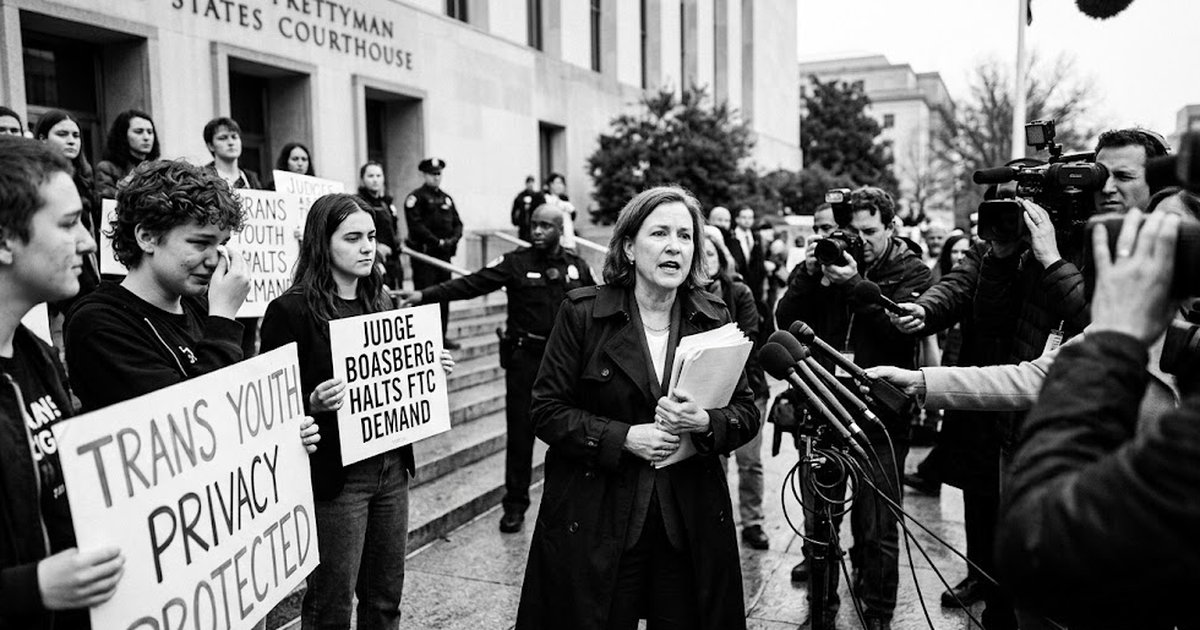
Judge James Boasberg, a federal judge in Washington, D.C., just stepped in. He’s ordering the Federal Trade Commission to stop demanding medical records from transgender minors. That’s not a rumor. It’s a real court order. The FTC wanted data from clinics that treat trans youth. The goal? To investigate whether these clinics break laws. But Boasberg said no. Not yet. He called the request “overbroad” and “a threat to privacy.”
Look, I’ve seen courts block government overreach before. But this one? It’s different. This isn’t about a policy. It’s about kids. Real kids. And their private health records. The judge didn’t say the FTC was wrong. He said the way they asked for data? That’s not how it’s done.
Here’s the kicker: The FTC had already sent out subpoenas. They were hunting for data. Now, they’re told to stop. The court didn’t say “never.” Just “not now.” But that “not now” could change everything.
Why This Matters to Moms, Dads, and Families
Let that sink in. Your child’s doctor visits? Their mental health records? Their therapy notes? That’s not public. Not supposed to be. But now, a federal agency wants to pull that data — just because a political figure says so?
Think about it. You take your daughter to a therapist. She’s struggling. You trust the doctor. Now, the government says, “We want every note.” Why? Maybe to “investigate.” But who’s really investigating? Is it the law? Or is it politics?
And here’s what I’ve seen up close: My sister’s son is transgender. He’s 16. He’s in therapy. He’s safe. He’s happy. But if some bureaucrat gets a list of every clinic treating kids like him — that’s not safety. That’s exposure. That’s risk.
Boasberg didn’t say the FTC was evil. He said the request was too wide. Too reckless. He said the government can’t just sweep in and grab private data because it’s “interested.” That’s not how democracy works. That’s not how families live.
What’s Behind the FTC Move? A Power Play?
Let’s be clear. The FTC didn’t make this request on its own. It was acting on orders. From the White House. From a president who’s made no secret of his views on gender identity.
But here’s the truth: The clinics say this isn’t about law. It’s about retaliation. They’re calling it “a political fishing expedition.” And they’re not alone in that belief.
One clinic, the Gender Health Center in Seattle, filed a lawsuit. They said the FTC’s demand “violates the privacy rights of vulnerable minors.” That’s not a headline. That’s a statement. From the clinic itself.
And the court agreed. Boasberg didn’t side with the clinics. He didn’t say the FTC was lying. But he said the way they asked for data? That’s not legal. Not under current rules. Not when it’s about kids.
So what does this mean? It means the rule of law still has teeth. Even when the president says “investigate.” Even when the political pressure is high.
How This Connects to What’s Happening Elsewhere
Now, let’s talk about the bigger picture. Because this isn’t happening in a vacuum.
Just this week, the California Supreme Court blocked a GOP sheriff’s election investigation. Riverside County Sheriff Chad Bianco had seized over 650,000 ballots. He said there was fraud. But the court said no. Not now. Stop. Preserve the evidence. Don’t move forward.
Why bring that up? Because both cases are about power. Who gets to decide what’s “real”? Who gets to demand data? Who gets to shut things down?
And then there’s Wisconsin. Chris Taylor won the Supreme Court race. He’s a liberal judge. His win expands the liberal majority. That’s a political shift. But it’s also a legal one. Because now, the court has a 5-2 liberal edge. That matters. It shapes how laws are enforced.
And finally — Taylor Frankie Paul. Yes, the same name. The “Secret Lives of Mormon Wives” star. She’s in court over her son. Utah’s Third District Court Commissioner Russell Minas said both parents “have concerns.” The court ordered supervised visits. She was granted a temporary protective order against her ex, Dakota Mortensen.
So what’s the link? It’s not the names. It’s the principle. Privacy. Safety. The right to not be hunted by government demand. Whether it’s your child’s therapy notes or your ballot — the rule of law should protect you. Not punish you.
What’s Next? The Real Test for Our Courts
So what happens now? The FTC can’t push forward with the data request. Not without a new plan. Boasberg gave them a path — but a narrow one. They can ask again. But only if they narrow the request. Only if they show it’s legal. Only if they prove it’s necessary.
That’s not a win for the FTC. But it’s not a loss for the rule of law. It’s a reminder: courts still matter. They’re not just rubber stamps. They’re checks. On power. On politics. On panic.
And here’s the bottom line: If the government can demand private medical records from trans youth just because someone in power says so — then no family is safe. Not yours. Not mine. Not the kid down the street.
But if courts say “wait” — like Boasberg did — then maybe we still have a system that protects the vulnerable.
Why This Isn’t Just About Trans Youth
Let me ask you something. Have you ever been afraid your child’s private records could be taken? Not by a hacker. Not by a scam. But by a government agency? Because someone in power said “investigate”?
That fear? It’s real. It’s not paranoia. It’s the cost of overreach. When power isn’t checked, families pay.
And this isn’t just about gender identity. It’s about trust. Can you trust the system? Can you trust that your doctor’s notes stay private? That your vote isn’t “under review” because a sheriff doesn’t like the results?
That’s the real test. Not just for the FTC. Not just for the courts. But for us. For every mom, every dad, every woman who watches the news and says, “Wait — is this normal?”
It’s not. And that’s why this moment matters. Because if we don’t stand up for privacy — for process — then what’s left?
Key Takeaways
- Judge James Boasberg halted the FTC’s demand for trans minors’ medical data, calling it “overbroad” and a threat to privacy.
- The California Supreme Court also stopped Sheriff Chad Bianco’s election investigation, preserving ballots and halting actions under legal review.
- Chris Taylor won the Wisconsin Supreme Court race, giving liberals a 5-2 majority — a shift that could shape future rulings on privacy and civil rights.
- Private health data for minors — especially vulnerable groups — must be protected from political or bureaucratic overreach.
FAQ
Q: What did Judge Boasberg actually order?
A: Judge Boasberg ordered the FTC to stop demanding medical records from clinics treating transgender minors. He called the request “overbroad” and a threat to privacy. The FTC must now revise its request to be narrower and legally sound.
Q: Why is the data request controversial?
A: Critics say the FTC’s demand isn’t about law enforcement — it’s about political pressure. Trans youth are already vulnerable. Their private medical records should not be subject to government fishing expeditions. The court agreed the request went too far.
Q: How does this affect everyday families?
A: It sets a precedent. If government can demand private medical data from minors based on political views, no family is safe. This case protects the right to privacy — especially for kids who need help, not scrutiny.
Q: What’s the connection to the California ballot case?
A: Both cases involve government overreach. In California, a sheriff seized ballots. In D.C., the FTC demanded health data. In both, courts stepped in to say “wait.” That’s the rule of law in action.
Q: Is Taylor Frankie Paul involved in this case?
A: No. The name “Taylor” appears in multiple cases — including the Wisconsin Supreme Court race and the Utah custody case — but not in the FTC or Boasberg decision. The name is common. The issues are not.
KEY_TAKEAWAYS
- Judge James Boasberg blocked the FTC’s demand for trans minors’ health data, calling it “overbroad” and a threat to privacy.
- The California Supreme Court halted Sheriff Chad Bianco’s ballot seizure, citing the need to preserve evidence and due process.
- Chris Taylor won the Wisconsin Supreme Court race, giving liberals a 5-2 majority — a shift that could impact future privacy and civil rights rulings.
- Privacy for vulnerable minors — especially in health and mental health records — must be protected from political or bureaucratic overreach.
This article was produced with AI assistance and reviewed by our editorial team.