

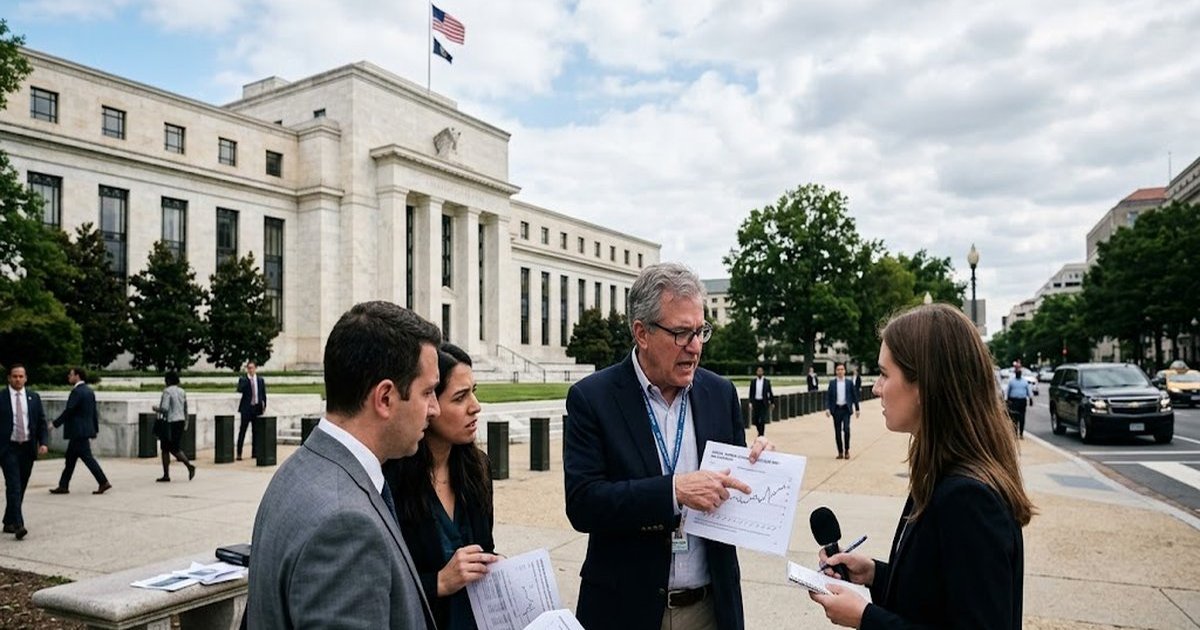
The Experts Are Missing the Mark
You work hard. You budget. You pay your bills on time. But lately, it feels like no matter what you do, you’re just not catching up.
You’re not behind because you’re doing something wrong. The problem’s bigger than your bank account. It’s in the system.
The Federal Reserve is supposed to keep prices stable and jobs strong. But over the last few years? They’ve been off the mark.
They told us inflation was just a blip. A temporary glitch. “Transitory,” they said. Like it’d vanish once things got back to normal.
It didn’t.
Now, your grocery bill is higher. Your car insurance? Skyrocketing. Your credit card interest? Way up. You’re not imagining it. It’s real.
We need to talk about why the Fed keeps missing the target—and what it means when their missteps hit your wallet.
The “Transitory” Trap That Cost You Money
Back in 2021, prices started climbing. The Fed said, “Don’t worry. It’s just temporary.”
They used that word—“transitory.” Meant it was short-lived. Meant it’d fade once the world rebooted.
So they waited.
That wait? Huge mistake.
Prices kept rising. Eggs? Up. Used cars? Soaring. Everything from diapers to diesel got pricier.
Finally, in late 2021, Chair Jerome Powell said it: “I think it’s probably a good time to retire that word.”
He was talking about “transitory.” But the damage was already done. Inflation had taken root.
And here’s the kicker: when the Fed hesitates, it’s not just a theory. It’s your paycheck, your grocery list, your rent.
Had they acted sooner, prices might’ve never exploded. But now? Your dollars buy less than they did two years ago.
That’s not inflation. That’s a slow bleed.
The National Debt Problem We Cannot Ignore
The Fed doesn’t act alone. They’re part of a bigger machine—one that includes the federal government, which loves to spend.
Our national debt? It’s out of control. As of March 2026, the U.S. Treasury says it hit $38.86 trillion.
That number? Mind-bending. Hard to wrap your head around.
But it matters. Because when the government borrows, it affects everyone.
They have to pay interest to borrow money. To get lenders to take the risk, they offer high rates. And those rates ripple through the economy.
When the government pays more to borrow, you do too. Mortgages? Higher. Car loans? Tougher to qualify for. Even a small loan feels tighter.
And the Fed’s stuck in the middle. They’re trying to keep things stable. But the government just keeps spending money it doesn’t have.
More debt means more money printed. More money in circulation means each dollar loses a little value.
It’s not just inflation. It’s a slow-motion devaluation of your savings.
Why the Fed’s Tool Fails to Fix Main Street
When inflation spikes, the Fed’s go-to move? Raise interest rates.
Simple idea: make borrowing harder, so people spend less. Less demand = prices cool down.
But here’s the flaw: it’s a sledgehammer. Not a scalpel.
It doesn’t fix why things are expensive. It doesn’t grow more food. It doesn’t drill more oil. It doesn’t build more homes.
Not great.
And worse? Higher rates make it harder for businesses to grow. A farmer can’t afford a new tractor. A builder can’t finance a new home.
So they pass the cost on to you. That’s how inflation loops back.
Think about it: the Fed pulls a lever to cool things down. But the result? You’re paying more for everything.
It’s not working. Not really.
The Reality of Current Prices
Yes, inflation is slowing. But slowing isn’t the same as reversing.
According to the Bureau of Labor Statistics, the Consumer Price Index rose 2.4% over the 12 months ending February 2026.
That sounds like progress, right? Maybe. But remember—this is on top of years of massive price hikes.
And at the grocery store? It’s worse.
The food index rose 3.1% in that same period.
Prices aren’t falling. They’re just growing slower.
So your cart still costs way more than it did four years ago.
That gap between the data and your reality? Huge. And it’s stressing millions.
A 2025 Northwestern Mutual Planning and Progress Study found 65% of U.S. adults say inflation is their top financial worry.
That’s not fear. That’s fact.
The Fed says things are under control. But you’re the one paying the bill.
Why Government Spending Makes It Harder
Let’s be real: Congress isn’t helping.
The Fed wants to pull money out of the economy. But Congress keeps pumping it in.
Every time they pass a massive spending bill, it floods the system with cash. More demand. Limited supply. Prices go up.
It’s like trying to cool a room with the AC on—but someone’s cranking the furnace.
That’s our economy right now.
The Fed is the air conditioner. The government is the furnace.
You’re stuck in the middle, paying for both.
So yes, the experts debate. But you? You need to protect your own money first.
What This Means for Your Family Budget
Let’s talk about your life.
First: your credit card? It’s dangerous. When the Fed raised rates, credit card companies followed—fast.
Carrying a balance? That’s a penalty. Interest charges are eating your budget alive.
Second: your savings? Losing value. Even if your bank pays 4%, but food costs go up 5%? You’re still losing ground.
Third: big purchases? Almost impossible. Home? Car? Way harder with today’s rates.
The system’s rigged for the middle class to struggle.
When the Fed gets it wrong, they just revise their forecast. But when you get it wrong? You can’t pay the power bill.
Stakes are different.
How to Protect Your Money Moving Forward
You can’t fix the Fed. You can’t fix the debt. But you can control your money.
Play defense. Start with your budget. Find the leaks—those small, sneaky expenses that add up.
Cancel unused subscriptions. Shop around for cheaper car insurance. Every $20 you save? That’s $20 you keep.
Next: kill your high-interest debt. Make credit cards your enemy. Pay more than the minimum—every month.
And if you’ve got money sitting in a regular savings account? Move it. Look for a high-yield savings account. Your cash should earn more, not less.
Don’t wait for Washington. The experts will keep arguing. You need to act.
Be a smart shopper. Buy store brands. Plan meals around what’s on sale. It’s not about being cheap—it’s about being smart.
And stay informed. Read. Learn. The more you understand how money works, the better your choices.
The Bottom Line on the Fed
They’re smart people. But economics isn’t a perfect science. It’s full of guesses. And mistakes.
They missed the warning signs. Waited too long. Rely on tools that hurt regular folks.
You’re not wrong to feel frustrated. The economy doesn’t match the upbeat news reports.
But here’s the thing: when you understand why the Fed keeps missing the mark, you take back power.
You’re not just reacting. You’re adapting.
Adjust your budget. Pay down debt. Protect your savings.
Focus on what matters. Ignore the jargon. Track your spending. Guard your savings. Build a fortress for your family.
Key Takeaways
- Move money into a high-yield savings account, and cutting out hidden budget leaks.
Frequently Asked Questions
What is the Federal Reserve?
The Federal Reserve is the central bank of the United States. They manage the country’s money supply and set interest rates to help control inflation.
Why do interest rates affect my credit cards?
Credit card companies base their rates on the numbers set by the Federal Reserve. When the central bank raises rates, your credit card company charges you more interest on your balances.
Will prices ever go back down?
Prices rarely go back to where they were in the past. When experts say inflation is slowing down, it just means prices are rising at a slower pace than before.