

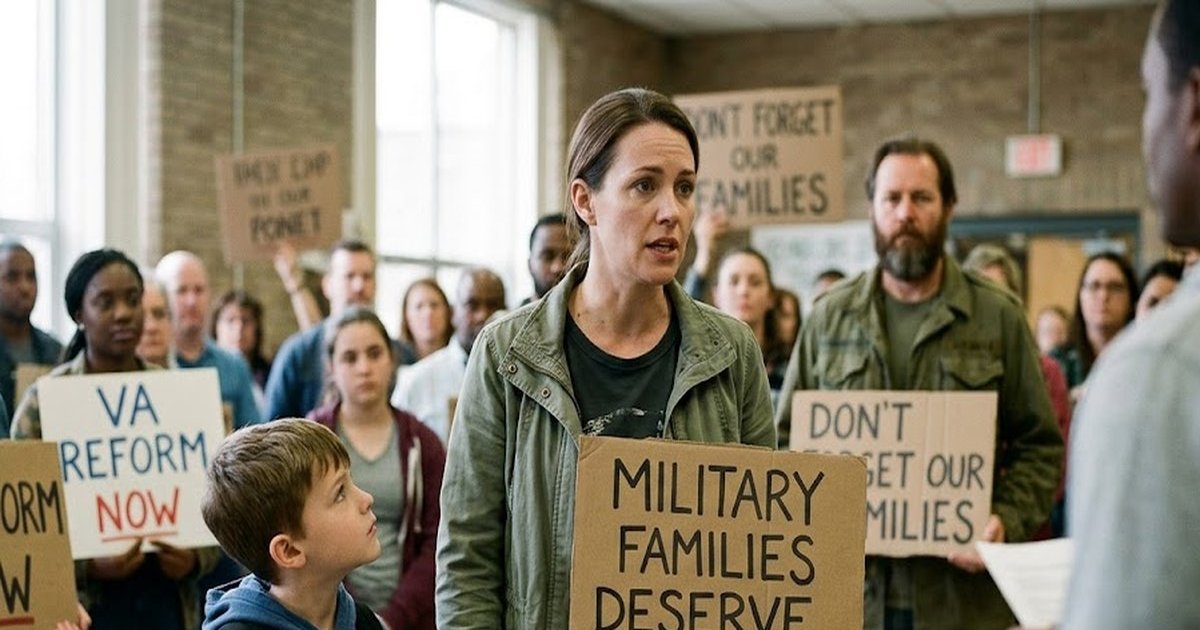
A Promise Made, A Promise Broken
When a young person swears an oath to defend the Constitution, our nation makes a solemn promise. We promise to take care of them if they are injured. But there’s a second part to that promise too: we must also take care of their families. For too long, the Department of Veterans Affairs (VA) has been a massive, unaccountable bureaucracy, leaving military families fighting a second war at home just to get the benefits they’ve earned. (It’s a heartbreaking situation, really.)
As conservative women, we’re often the ones holding the fort – managing the household during deployments, becoming the primary caregivers and researchers when our spouses return home wounded, sitting on hold with the VA for hours, filling out endless stacks of paperwork for our loved ones. Think about that.
We watch the people we love struggle with a government system that often treats them like a number on a spreadsheet. It’s time for a frank, factual conversation about the VA reform fight. We need to look past the political talking points and examine the real numbers and the impact on our families’ values. Military families deserve better from the nation they served.
A Skyrocketing Budget and Bureaucratic Bloat
You often hear the mainstream media saying the VA is underfunded. They claim it just needs more tax money to fix things. But the facts paint a different story. According to the Congressional Budget Office (CBO), the VA operates with a staggering amount of money. The total budget request for Fiscal Year 2024 was $325.1 billion, according to CBO reports. That’s a lot of money.
By Fiscal Year 2025, that total budget grew even more to $368 billion. The VA budget has increased by more than 60 percent since 2019, the CBO reports. We’re fully funding the largest integrated healthcare system in the United States, which supports over 9.2 million enrolled veterans. No kidding.
Yet, wait times remain a critical issue despite this massive cash influx. Facilities across the country continue to suffer from mismanagement. Where is all this money going? While frontline doctors do incredible work, much of the budget gets swallowed by middle management, administrative costs, and IT contracts that simply don’t deliver results. Classic misdirection.
For everyday Americans struggling with inflation, this mismanagement is infuriating. We believe in strict government accountability. If we spend over a third of a trillion dollars on veterans, they should get VIP care. Instead, they’re forced to navigate a maze of red tape.
The Truth About the “Shrinking” Claims Backlog
Early in 2025, the VA proudly announced a 57 percent drop in its disability claims backlog. It sounded like a massive victory on the surface, with politicians patting themselves on the back and press releases declaring that long waits were finally over. But it wasn’t that simple.
As conservatives, we tend to look beneath the surface of government statistics. This reduction came at a severe cost to accuracy, according to Chisholm Chisholm & Kilpatrick (CCK Law). In the rush to clear the queue, thousands of disability claims were reportedly rubber-stamped – not given a thorough review, as the 2025 CCK Law analysis noted.
Speed doesn’t equal accuracy. When a claim is wrongly denied, the burden falls on the veteran’s family. The wife has to spend countless hours researching, organizing paperwork, and fighting for what’s right. The family is the bedrock of our republic, and military families are the steel framework that keeps us safe.
The Path Forward: Accountability and Constitutional Principles
Reforming the VA is a moral imperative. As conservative women, we must use our voices to demand better for military families. We must insist on a system built on accountability and respect for the individual.
- Audit the Budget: Congress must conduct independent audits of the VA budget. We can’t keep pouring $368 billion into a broken system without demanding results. Middle management needs to be trimmed, and resources need to go to frontline care.
- Expand Free-Market Solutions: We must demand permanent protections for the Community Care program. No veteran should be trapped on a government waitlist when private care is available. The free market provides better, faster healthcare.
- Support the Family Unit: We must support the spouses and families who bear the brunt of these failures.
The fight to reform Veterans Affairs is a fight for our nation’s soul. It’s a fight against big government and for the individual. We have the facts and the resolve. Together, we can ensure our nation keeps its promise to those who sacrificed for our freedom.
Key Takeaways
- Ensuring our veterans receive quality care is a non-negotiable responsibility.
- 9/11 veterans find the transition to civilian life difficult, placing a massive emotional and financial burden on military spouses who are left to navigate the broken system.
- Access to affordable, private-sector healthcare through the Community Care program is essential, offering a free-market solution that gives veterans the medical choice and dignity they deserve.
Frequently Asked Questions
What is the current budget for the Department of Veterans Affairs?
The VA budget has grown significantly in recent years, reaching an astounding $368 billion for Fiscal Year 2025. Despite this massive influx of taxpayer funds, the agency continues to struggle with bureaucratic bloat and inefficiencies. This proves that simply throwing money at a government problem does not guarantee our veterans receive timely, world-class care.
How does the Veterans Community Care Program work?
Established by the MISSION Act, this program allows eligible veterans to receive healthcare from private, community-based providers rather than waiting for a VA facility appointment. It’s designed to ensure veterans get timely and accessible care, especially in rural areas. Unfortunately, Washington bureaucrats continually attempt to restrict this free-market option to keep veterans trapped in the government system.
What is the truth about the recent drop in the VA disability claims backlog?
While the VA proudly announced a 57% reduction in the backlog in early 2025, legal experts warn that this speed came at the cost of accuracy. Thousands of disability claims were reportedly rubber-stamped or improperly processed without thorough review. This lack of quality control often forces veterans and their spouses into a lengthy, stressful appeals process to secure their rightful benefits.