

It is a familiar and deeply unsettling feeling. Every time the news cycle turns its focus to the Middle East, a collective holding of breath happens across kitchen tables in America. For women who manage households, raise children, and vote with their family’s best interests in mind, the word “war” carries a heavy, personal weight. Many of us remember the early 2000s vividly. We remember the yellow ribbons tied around old oak trees, the deployment ceremonies, and the nightly news updates from Baghdad. When we hear pundits discussing rising tensions with Iran today, the immediate fear is a return to the long, painful years of the Iraq War.
But fear is often a product of misinformation. Washington politicians and mainstream media networks frequently use a broad brush to paint the Middle East as one continuous, unbroken conflict. The truth is far more complex, and understanding the reality of the situation is vital for every American voter. The current geopolitical standoff with the Islamic Republic of Iran is fundamentally different from the 2003 invasion of Iraq. The strategies, the geography, the military capabilities, and—most importantly—the stakes for the American family are entirely distinct.
To navigate these turbulent waters, we must set aside the sensationalism and look closely at the facts. By examining the stark differences between Saddam Hussein’s Iraq and modern-day Iran, we can better understand what a conflict actually entails, how it threatens our economy, and why we must demand strict constitutional accountability from our leaders in Washington.
A Fortress Nation: Geography and Demographics
The first major difference between Iraq and Iran lies in simple geography and population, which dictate the reality of any military engagement. In 2003, Iraq was a relatively flat, accessible country roughly the size of California. Its population stood at about 25 million people. After a decade of severe international sanctions and the devastating losses of the 1991 Gulf War, Iraq’s infrastructure was crumbling, and its military was a shadow of its former self.
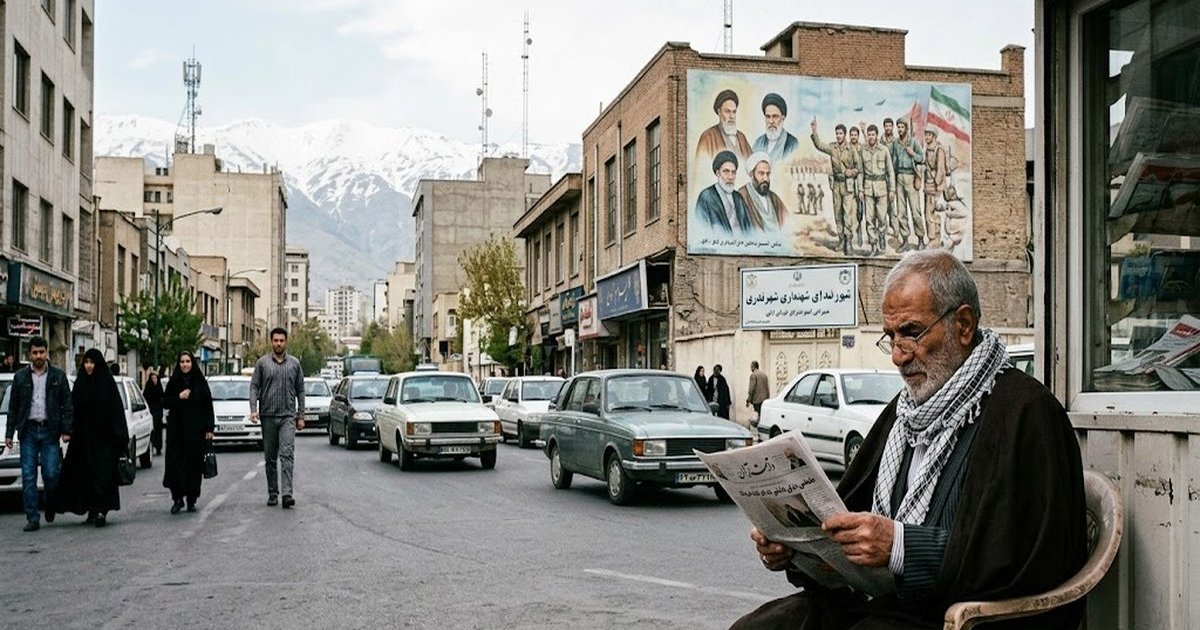
Iran, by contrast, is a geographic fortress. According to the CIA World Factbook, Iran encompasses over 1.6 million square kilometers—making it slightly smaller than the state of Alaska and nearly four times the size of Iraq. More importantly, Iran is surrounded by rugged, towering mountain ranges, such as the Zagros and Alborz mountains, which serve as natural, nearly impenetrable defenses against a traditional ground invasion.
Furthermore, Iran’s population is currently estimated at nearly 89 million people. This is a massive, heavily populated, and fiercely nationalistic country. The sheer scale of Iran means that a traditional “boots on the ground” invasion or occupation—the kind America attempted in Iraq—is not just highly unlikely; military experts widely consider it strategically unfeasible. The threat Iran poses requires a completely different approach from the conventional warfare seen in the early days of Operation Iraqi Freedom.
The Era of Asymmetric and Proxy Warfare
In 2003, the United States military faced a conventional army. We fought tanks, infantry, and traditional artillery. Saddam Hussein’s forces, already hollowed out, collapsed within weeks of the initial invasion. Iran does not play by those outdated rules. Tehran has spent the last four decades mastering what military strategists call “asymmetric warfare.”
Instead of relying solely on a traditional army to face off against the technologically superior United States, Iran utilizes a vast network of proxy militias. According to the Council on Foreign Relations, Iran funds, trains, and equips groups like Hezbollah in Lebanon, Hamas in Gaza, and the Houthi rebels in Yemen. These proxies act as an extended, deniable arm of the Iranian government, allowing Tehran to project power and destabilize the region without directly engaging in state-to-state combat.
Additionally, Iran has invested heavily in modern, cost-effective military technology. Their ballistic missile program is the largest and most diverse in the Middle East. We have also seen the deadly effectiveness of their unmanned aerial vehicles (UAVs), particularly the Shahed drones, which have been exported globally. A conflict with Iran is not about rolling tanks across a desert; it involves defending against cyberattacks, neutralizing drone swarms, and protecting international shipping lanes from proxy harassment. It is a modernized, indirect form of conflict that requires a high-tech, strategic defense rather than a massive troop deployment.
The Kitchen Table Threat: Energy and Inflation
Why should a mother in Ohio or a grandmother in Texas care about the tactical differences between Iraq and Iran? Because while the battleground may be thousands of miles away, the economic fallout will land squarely on your kitchen table. The connection between Middle Eastern stability and the American family budget is direct and immediate.
The primary economic artery of the Middle East is the Strait of Hormuz, a narrow waterway bordering Iran. According to the U.S. Energy Information Administration (EIA), approximately 21 million barrels of oil pass through this strait every single day. That accounts for roughly 20% of global petroleum liquids consumption. Iran has frequently threatened to mine or blockade this chokepoint during times of high tension.
If the Strait of Hormuz were disrupted, the global oil market would experience an unprecedented shock. We would not just see gas prices at the pump rise to five or six dollars a gallon; we would see a cascading effect across the entire American economy. Higher diesel prices mean higher costs for the trucking industry. When trucking costs rise, the price of everything transported by truck—from milk and eggs to prescription medications and clothing—skyrockets. At a time when American families are already struggling under the weight of historic inflation and rising living costs, an energy crisis triggered by Iranian aggression would be devastating. This is why deterring Iran is not just a matter of foreign policy; it is a matter of domestic economic survival.
Nation-Building is Out, Deterrence is In
Perhaps the most profound difference between the Iraq era and today is the shift in the American conservative mindset. Over the past two decades, patriotic Americans have taken a hard, honest look at the results of our foreign policy. The ambition of “nation-building”—the idea that we could depose a dictator and construct a Western-style democracy in the Middle East—has been heavily discredited.
The costs of that idealism were staggering. According to the Watson Institute for International and Public Affairs at Brown University, the “Costs of War” project estimates that the United States spent nearly $3 trillion on the wars in Iraq and Syria. More tragically, we lost over 4,500 American service members in Iraq, with tens of thousands more returning home with life-altering visible and invisible wounds.
Conservative Americans honor the profound sacrifices made by our military families, but we have rightly drawn a line in the sand: no more endless wars, and no more nation-building. The goal with Iran is not regime change imposed by American troops. The goal is deterrence. It is about utilizing crippling economic sanctions, projecting overwhelming naval and air power, and supporting our regional allies to contain the threat. We must ensure Iran never acquires a nuclear weapon and cannot disrupt global trade, but we must achieve this without committing a new generation of American youth to a decades-long occupation.
The Constitutional Imperative and Government Accountability
Finally, the lessons of Iraq must be applied to how our government operates here at home. For too long, Congress has abdicated its constitutional responsibilities, allowing the Executive Branch—regardless of which party holds the White House—to conduct prolonged military engagements through broad, vaguely worded authorizations.
As conservatives, we believe in the strict interpretation of the United States Constitution. Article I, Section 8 is clear: the power to declare war belongs solely to Congress. It belongs to the representatives elected by the people. If the threat from Iran ever escalates to the point where sustained military action is required, the American people deserve full transparency. We demand a robust, public debate on the floors of the House and the Senate.
Executive overreach is a threat to our Republic. Washington bureaucrats and the foreign policy establishment must not be allowed to draft our sons and daughters into conflict without a clear, achievable objective and a formal declaration from Congress. Accountability is the cornerstone of our liberty.
The standoff with Iran is complex and dangerous, but it is not a repeat of 2003. By understanding Iran’s geography, its reliance on proxy warfare, and the direct threat it poses to our family budgets, we can advocate for smart, strong, and restrained foreign policy. We must demand a strategy that prioritizes the economic well-being of the American family, honors the sacrifices of our military by deploying them only as a last resort, and rigidly adheres to the constitutional limits placed on our government. That is the true patriotic path forward.
Frequently Asked Questions
Are we going to send American ground troops into Iran?
Military experts and defense planners widely consider a traditional ground invasion of Iran strategically unfeasible due to the country’s massive size, mountainous terrain, and large population. The current U.S. strategy focuses on deterrence, economic sanctions, and naval/air assets rather than nation-building or ground occupation.
How does Iran’s military compare to Iraq’s in 2003?
Unlike Saddam Hussein’s depleted conventional army, Iran relies heavily on “asymmetric warfare,” including advanced drone technology, ballistic missiles, and cyber capabilities. Furthermore, Iran projects power through heavily funded proxy groups like Hezbollah and the Houthis, avoiding direct, traditional army-to-army combat.
Why does a conflict in the Middle East affect U.S. inflation and grocery prices?
Roughly 20% of the world’s daily oil consumption passes through the Strait of Hormuz, which borders Iran. If this waterway is disrupted, global oil and diesel prices would skyrocket, immediately increasing shipping and trucking costs, which directly inflates the prices of groceries and everyday goods in America.
This article was produced with AI assistance and reviewed by a human editor for accuracy and clarity. For more about our editorial standards, visit our About page.