

The Quiet Engine of American Democracy
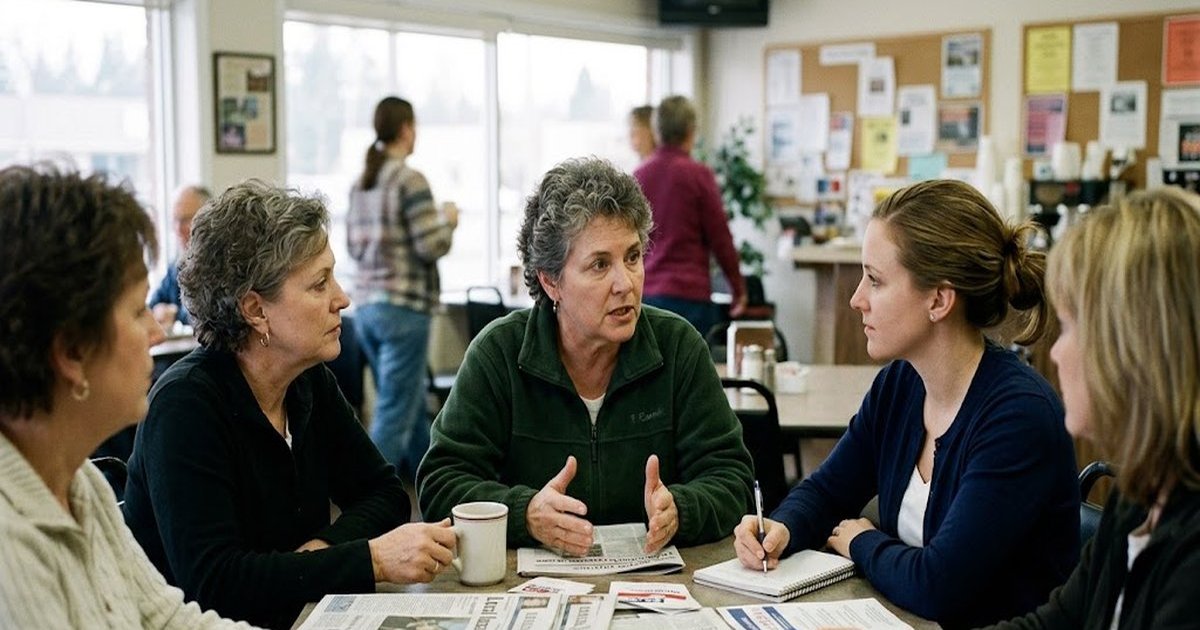
In the relentless news cycle of modern politics, the mainstream media frequently obsesses over shifting demographics, youth voting trends, and the latest coastal cultural movements. Yet, hidden in plain sight is the most consistent, driven, and consequential voting bloc in the United States: the conservative American woman. You will not always find her shouting into a megaphone on a city street corner, nor is she primarily focused on generating viral moments on social media. Instead, her influence is woven into the very fabric of our communities. She is organizing local school board campaigns, balancing household budgets amidst crippling inflation, leading church committees, and, most importantly, showing up at the ballot box in record numbers.
For women between the ages of 45 and 65, the stakes of every election are deeply personal. This demographic has spent decades building careers, raising families, and contributing to the tax base. They have seen political fads come and go, and they possess the seasoned wisdom to separate campaign promises from actual, lived realities. The conservative woman votes not based on utopian theories, but on practical outcomes: the cost of groceries, the safety of her neighborhood, the quality of her grandchildren’s schools, and the preservation of the constitutional liberties she inherited.
To understand the true trajectory of American politics, we must look past the noisy fringes and examine the data. When we do, the conclusion is undeniable. Conservative women are not just participating in the democratic process; they are actively steering the ship. They are the bedrock of the Republican base, the ultimate deciders in key swing districts, and the quiet engine keeping the American republic moving forward.
By the Numbers: Turning Out When It Matters Most
The political power of women is not merely a subjective observation; it is an empirical fact supported by decades of data. According to the Center for American Women and Politics (CAWP) at Rutgers University, women have outvoted men in every single presidential election since 1980. The gap is not insignificant. Data from the United States Census Bureau confirms that in the 2020 presidential election, 68.4 percent of eligible female voters cast their ballots, compared to 65.0 percent of eligible male voters. This amounts to millions of additional votes cast by women.
When we narrow the focus to age and ideology, the power of the conservative woman becomes even more pronounced. Historical turnout data consistently shows that voters aged 45 and older vote at significantly higher rates than younger demographics. Pew Research Center analyses of validated voters have repeatedly demonstrated that white women—a demographic that consistently leans conservative in national elections—are among the most reliable voters in the country. In recent midterm and presidential cycles, conservative-leaning women have shown an unshakeable commitment to civic duty.
Why is this reliability so crucial? Elections are ultimately decided by those who actually show up, not by those who merely express an opinion to a pollster. Conservative women do not wait for ideal weather conditions or perfect candidates; they view voting as a fundamental duty. Their high participation rates mean that any political platform ignoring their priorities is destined to fail. Politicians who underestimate the organizational capacity and sheer numerical advantage of these women do so at their own electoral peril.
The Kitchen Table Economy: Managing the Nation’s Purse Strings
If you want to know the true state of the American economy, do not look at Wall Street; look at the woman managing her family’s kitchen table budget. Conservative women are deeply pragmatic, and their political priorities are heavily influenced by economic realities. According to consumer data, women influence or make upwards of 80 percent of all consumer purchasing decisions in the United States. They are the Chief Financial Officers of their households, making them acutely aware of the devastating impacts of inflation and reckless government spending.
Data from the Bureau of Labor Statistics (BLS) over the past several years paints a stark picture of the challenges everyday Americans face. While politicians may boast about cooling inflation rates, the compounding effect of the massive price spikes that peaked at 9.1 percent in mid-2022 is still being felt at the grocery store checkout and the gas pump in 2026. Cumulative inflation has permanently elevated the baseline cost of living. Conservative women see these numbers not as abstract economic indicators, but as direct threats to their families’ financial security and their own retirement plans.
Furthermore, this voting bloc possesses a deep concern for the nation’s fiscal health. When the Congressional Budget Office (CBO) releases projections showing the national debt spiraling out of control, conservative women recognize the inherent immorality of passing trillions of dollars of debt onto their children and grandchildren. They demand government accountability because they understand a fundamental truth of household economics: you cannot spend what you do not have. This demand for fiscal responsibility and lower taxation drives their unwavering support for conservative economic policies that promote free enterprise and limit government overreach.
Protecting the Next Generation: The Education Awakening
Perhaps the most profound political shift in recent years has been the mobilization of conservative women around the issue of education. Long considered a secondary issue in national politics, education and parental rights have been thrust to the forefront by mothers and grandmothers who refuse to cede control of their children’s upbringing to bureaucratic institutions. This is not a top-down political strategy; it is a genuine, grassroots awakening.
The tipping point occurred when the veil was pulled back on curriculum standards and school policies that alienated parents. When organizations like the National School Boards Association attempted to marginalize vocal parents, it sparked a fierce backlash. Conservative women stepped out of their comfort zones and began attending school board meetings, filing Freedom of Information Act requests, and ultimately running for local office themselves. They demanded transparency in what was being taught, advocating for a return to fundamental academics and traditional historical narratives.
This “mama bear” phenomenon has completely altered the political landscape. Pew Research data has highlighted a growing consensus among conservative-leaning voters that parents must have the primary say in their children’s education and medical decisions. By organizing locally, conservative women have proven that true political power originates in the community. They have successfully flipped school boards across the country, ensuring that family values and parental rights are protected at the most foundational level of government. They understand that whoever controls the education system shapes the future of the nation, and they are refusing to sit idly by while progressive ideologies are pushed onto the next generation.
Defending Constitutional Liberties and Accountability
Beyond economics and education, the conservative woman is anchored by a deep reverence for the United States Constitution. Having lived through various cultural and political shifts, women in the 45-65 age bracket possess a mature understanding of why limited government and the separation of powers are essential. They do not view the Constitution as an outdated document, but as the vital firewall protecting their families from authoritarianism and government overreach.
This demographic is intensely focused on the First and Second Amendments. They recognize that the freedom to practice their faith, to speak their minds without fear of censorship, and to protect their homes are non-negotiable human rights. When federal agencies attempt to bypass Congress to create sweeping regulations, or when the justice system appears to be weaponized for political gain, conservative women are the first to recognize the danger. They do not demand a government that solves every problem; they demand a government that stays within its constitutional bounds and respects the individual liberty of its citizens.
The Road Ahead: Faith, Family, and Freedom
The power of the conservative woman lies in her consistency and her commitment to foundational American values. She is the glue that holds communities together, the pragmatic voice in times of economic distress, and the fierce protector of the next generation. As we look toward future elections, campaign strategists would do well to remember who truly holds the power in this country.
The conservative American woman does not need the validation of the mainstream media to know her worth. Armed with facts, guided by faith, and driven by a love for her family and her country, she will continue to be the most formidable force in American politics. By staying informed, holding elected officials accountable, and showing up at the polls election after election, conservative women are not just participating in history—they are writing it.
Frequently Asked Questions
Do women really vote at higher rates than men in the United States?
Yes. According to data from the U.S. Census Bureau and the Center for American Women and Politics, women have turned out to vote at higher rates than men in every single presidential election since 1980. This consistent gap translates to millions of additional votes cast by women nationwide.
What are the primary issues driving conservative women to the polls today?
The economy and inflation consistently rank as top concerns, as women manage the daily impacts of rising prices on household budgets. Additionally, parental rights in education, government accountability, and the protection of constitutional liberties are massive drivers of conservative voter turnout.
How can I get more involved in making a difference in my local community?
Start by attending your local school board, city council, or county commissioner meetings to understand the issues affecting your immediate area. You can amplify your impact by volunteering for local conservative candidates, joining grassroots parent organizations, or even running for local office yourself.
This article was produced with AI assistance and reviewed by a human editor for accuracy and clarity. For more about our editorial standards, visit our About page.