
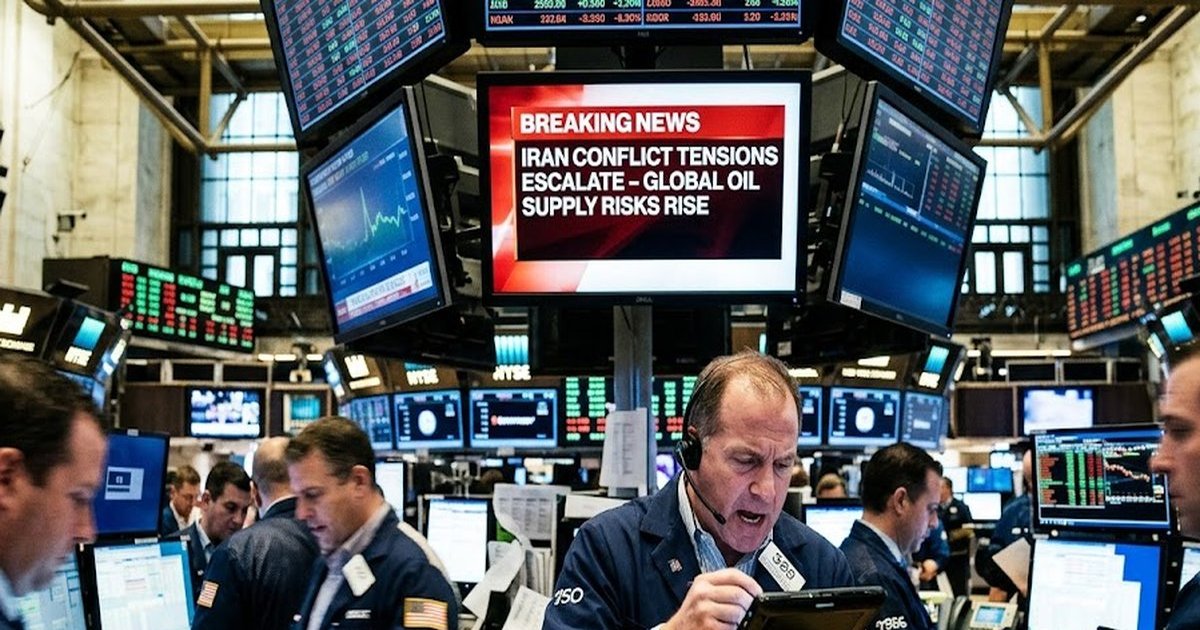
The Disconnect Between Wall Street and Global Reality
Since the United States and Israel launched coordinated military strikes against Iran on February 28, the world has held its collective breath. Yet, if you look at the daily behavior of the American stock market, you might assume nothing of consequence is happening. Wall Street analysts and institutional investors continue to project an unsettling aura of calm, aggressively trading as though a major geopolitical conflict in the oil-rich Middle East will have zero impact on the American economy. This dangerous complacency threatens not just the institutional portfolios of coastal elites, but the hard-earned retirement savings and household budgets of everyday American families.
Financial experts who operate outside the Wall Street echo chamber are beginning to sound the alarm. Bob Elliott, a former hedge-fund executive and current CEO of Unlimited Funds, recently warned that markets are failing to reflect the inevitable shock to global oil prices resulting from the Iran conflict. Investors are acting with profound blindness, pricing in a swift resolution that simply does not align with the facts on the ground. When the market ignores reality, Main Street pays the price. Every time oil prices spike due to Middle Eastern instability, American women see the immediate consequences at the gas pump, the grocery store, and in the diminishing purchasing power of their family’s savings.
The Organization for Economic Cooperation and Development (OECD) validated these concerns in its interim economic outlook released on Thursday. The international body issued a stark warning: the Iran war will spare no major global economy. While the OECD noted that the United Kingdom stands to suffer worse economic hits than other developed nations, the ripple effects will inevitably wash up on American shores. Global supply chains, already fragile from years of mismanagement and pandemic-era disruptions, face new, severe bottlenecks. Wall Street’s refusal to price in these risks means that when the economic reality finally shatters their illusion, the resulting market correction could severely damage the 401(k)s and pension plans of Americans approaching retirement.
Boots on the Ground and the “Final Blow”
While financial markets hum along, the military reality grows increasingly grim and complex. The Pentagon is actively moving significant assets into the region, preparing options for what the White House has described as a “final blow.” Recent reports from military sources confirm that 2,000 U.S. troops from the 82nd Airborne Division, along with Marine units, are deploying to the Middle East. The prospect of an expanded ground war is no longer a distant possibility; it is a looming reality. American families—many of whom have sons, daughters, and spouses wearing the uniform—understand the gravity of these deployments far better than the traders on the floor of the New York Stock Exchange.
The human cost of this conflict is already materializing. Central Command recently reported that nearly 300 U.S. military troops have sustained injuries since the war began nearly a month ago. In response, President Donald Trump has issued a stark ultimatum to Tehran, telling Iranian leaders to get serious about negotiations or face a scenario with “no turning back.” However, Iranian officials publicly rejected these ceasefire overtures. Iran’s Foreign Minister stated categorically that there are no ongoing talks with the United States, demanding a permanent end to the conflict and compensation while warning of a relentless response to any American island campaigns.
From an administrative standpoint, the White House is signaling full commitment to the current military trajectory. Press Secretary Karoline Leavitt confirmed on Wednesday that the administration will not seek congressional authorization for the war, arguing that such a move is unnecessary given that the conflict has been active for nearly a month. This decisive, if controversial, executive posture stands in sharp contrast to the diplomatic hesitation that defined the previous administration. In a stunning recent admission, former Secretary of State Antony Blinken confessed that the Biden administration’s push for a stronger Iran nuclear deal was deliberately impeded by their focus on midterm elections. That kind of political calculation emboldened Iranian aggression, forcing the current administration to utilize heavy-handed military measures to restore deterrence.
The Global Chessboard: China’s Advantage and Europe’s Hesitation
Beyond the immediate kinetic conflict, the war in Iran is fundamentally reshaping the global balance of power, often to America’s detriment. Chinese President Xi Jinping is watching the U.S.-Iran conflict from the sidelines—exactly where Beijing wants to be. As America expends military resources, political capital, and national treasure in the Middle East, China faces less resistance in its own sphere of influence. The strategic pivot to Asia has been forcibly paused. The White House recently confirmed that President Trump’s highly anticipated summit with President Xi in China has been rescheduled to May 14-15 entirely due to the demands of the Iran war.
While America takes on the burden of Middle Eastern stability, our traditional allies are conspicuously absent. During a Thursday Cabinet meeting, President Trump rightfully criticized NATO, stating the alliance failed a critical test by refusing to join the U.S. military operation against Iran. The reluctance of European nations to support American efforts exposes deep fractures in Western unity.
The reasons behind this European cowardice are deeply troubling. Speaking at the Conservative Political Action Conference (CPAC) in Dallas, Texas, former British Prime Minister Liz Truss delivered a blistering critique of her own country’s foreign policy. Truss claimed the United Kingdom failed to back the U.S. strikes on Iran because British leadership felt compelled to “appease British Islamists.” Her candid assessment highlights a terrifying reality: radical ideologies have infiltrated Western democracies so deeply that they are now dictating foreign policy and fracturing historic military alliances. When domestic appeasement overrides national security, the entire free world becomes vastly more vulnerable.
The Washington Machine Cashes In
Perhaps the most infuriating aspect of the ongoing conflict is how quickly the Washington swamp has moved to profit from it. While American families worry about inflation and military families pray for the safe return of the 82nd Airborne, defense and energy lobbyists are experiencing a financial gold rush. Disclosures reveal that nearly three dozen lobbying firms have registered to lobby the federal government on defense and energy issues just since the strikes began on February 28.
War is big business in Washington. The rapid mobilization of the lobbying class proves that while everyday Americans bear the emotional and economic brunt of international conflict, Beltway insiders see tragedy as an opportunity for profit. This stark contrast between the governing elite and the governed citizens underscores exactly why conservative Americans remain deeply skeptical of prolonged foreign engagements. It is essential to recognize who is paying the price for this conflict and who is cashing the checks.
American women, who traditionally manage household finances and serve as the backbone of their communities, must remain vigilant. Wall Street will not protect your retirement account out of the goodness of its heart, and Washington lobbyists will not prioritize your family’s economic security over their profit margins. As investors continue to display a dangerous complacency regarding the Iran war, everyday Americans must take a sober look at the geopolitical reality. Prepare your household for prolonged inflation, demand accountability from your elected representatives regarding military strategy, and refuse to let the financial elites blindside your family’s future.
Frequently Asked Questions
When did the current military conflict with Iran officially begin?
The current military conflict began on February 28, when the United States and Israel launched coordinated military strikes against Iran. The conflict has been ongoing for nearly a month, prompting shifting military and economic responses.
Why was President Trump’s meeting with Chinese President Xi Jinping postponed?
The highly anticipated summit between President Trump and President Xi was forced to be postponed due to the demands and strategic focus required by the escalating war in Iran. The White House confirmed the trip to China has been rescheduled for May 14-15.
Is the White House seeking congressional approval for the ongoing military action?
No. White House Press Secretary Karoline Leavitt stated that the administration does not plan to seek congressional authorization for the war in Iran. She noted the move was “unnecessary” because the active conflict has already been underway for nearly a month.
This article was produced with AI assistance and reviewed by a human editor for accuracy and clarity. For more about our editorial standards, visit our About page.