
The Unraveling of the American Airport Experience
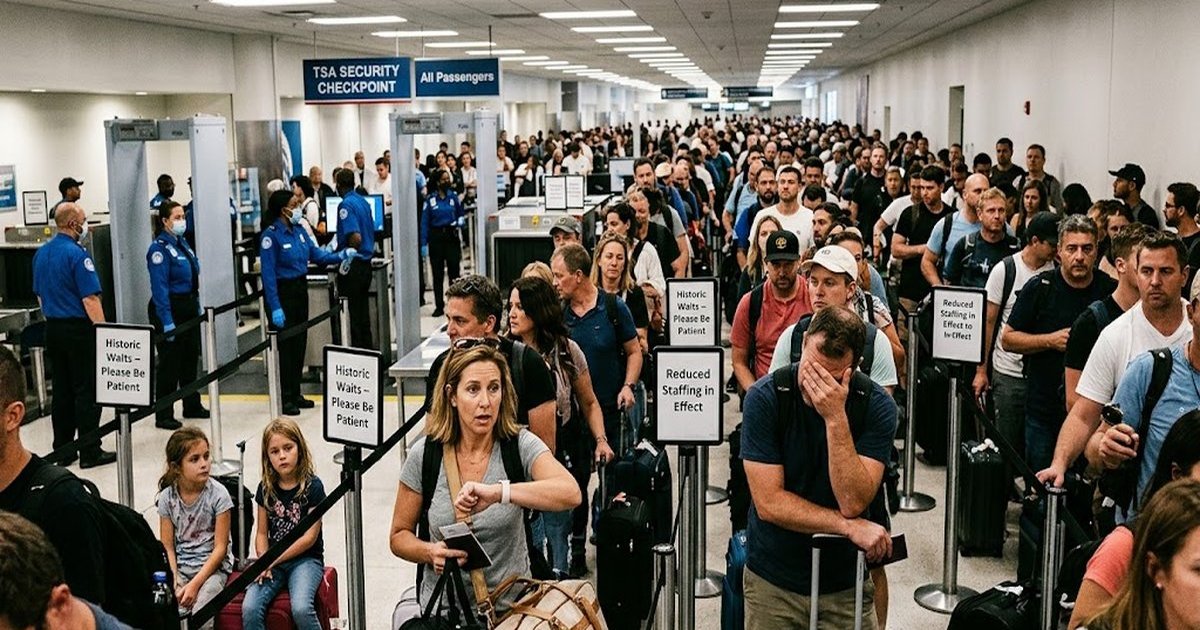
If you have walked into a major American airport in the last few weeks, you have likely walked into a scene of unparalleled chaos. The routine stress of modern air travel has mutated into a full-blown crisis, characterized by staggering six-hour wait times, snake-like lines that wrap around terminal buildings, and a pervasive atmosphere of profound anxiety. For the everyday American family trying to visit loved ones, or the business traveler attempting to keep our economy moving, the airport has transformed from a transit hub into a test of human endurance.
This unprecedented collapse in efficiency is the direct result of the ongoing Department of Homeland Security (DHS) shutdown, which is now dragging into its sixth agonizing week. The ripple effects are no longer just political talking points debated on Sunday morning television; they are a harsh reality playing out on the linoleum floors of departure halls across the country. Morale has plummeted as most DHS employees, including our frontline Transportation Security Administration (TSA) agents, have gone without pay for nearly half the fiscal year when combined with the record 43-day government-wide shutdown last fall. Exhausted, demoralized, and financially strained, nearly 500 airport security staff have already quit, leaving our vital security checkpoints severely understaffed.
The situation has become so democratized in its misery that even the most connected figures in Washington cannot escape it. Recently, former Attorney General Bill Barr was spotted looking thoroughly miserable while trapped in an hours-long TSA line at Houston’s George Bush Intercontinental Airport. The fact that he was serving as the top legal lieutenant to the very president for whom the airport is named afforded him no special privileges to dodge the gridlock. When the bureaucratic gears of Washington grind to a halt, every American is left paying the price.
Survival Tactics: Wild Ways Travelers Are Coping
Faced with seemingly insurmountable delays, American ingenuity is kicking in, albeit in bizarre and sometimes desperate ways. Travelers are no longer just packing a carry-on; they are packing survival kits for the security line. The sheer anxiety of missing a flight after paying thousands of dollars for family vacations has led to a fascinating, and somewhat wild, shift in human behavior at the terminal.
We are seeing reports of travelers arriving up to eight hours before their scheduled domestic departures, bringing literal camping chairs to sit in while the line inches forward. Impromptu “support groups” are forming among strangers stuck in the same queue, with people organizing snack-sharing networks to keep blood sugar—and tempers—from dropping to dangerous levels. Parents are downloading hours of extreme meditation and deep-breathing guides, not for the flight, but to keep themselves and their children calm amidst the suffocating press of the crowd.
Some savvy travelers are resorting to wearing wearable acupressure devices or using heavy essential oil diffusers right in the middle of the terminal, desperate for anything that might take the edge off the airport anxiety. You will now routinely see professionals in business suits sitting cross-legged on the floor practicing mindfulness exercises just yards away from the metal detectors. It is a surreal sight. While these wild coping mechanisms speak to the resilience of the American public, they also highlight a deeply embarrassing failure of our federal government. Citizens should not have to mentally and physically prepare for battle simply to board a commercial aircraft in the United States.
The Radical Demands Prolonging the DHS Shutdown
To understand why families are sleeping on airport floors, we must look at the cynical political gamesmanship currently paralyzing Capitol Hill. The Senate remains locked in a bitter staring contest. Recently, Senate Majority Leader John Thune (R-SD) outright rejected the latest counteroffer from Senate Democrats, stating definitively that the proposal was “not even close” to an acceptable compromise.
Why did Leader Thune reject it so forcefully? Because Democrats are attempting to use the funding of the TSA and the broader DHS as leverage to impose radical restrictions on Immigration and Customs Enforcement (ICE). As the crisis mounts, Democrats are inexplicably demanding that immigration enforcement agents be prohibited from wearing protective masks and be forced to obtain judicial warrants before entering private property. They are, in essence, demanding the operational neutering of our interior border enforcement in exchange for paying the men and women who keep our airplanes safe.
Leader Thune rightfully accused Democrats of “rehashing old ground” and going in circles. The refusal to cleanly fund the DHS without attaching extreme, open-border-aligned riders is a startling abdication of duty. It demonstrates a fundamental disconnect between the priorities of the political left and the safety of the American public. By tying the functionality of our national aviation system to their ideological crusade against ICE, Democratic leadership is making it abundantly clear that their political base matters more than the functioning of the country.
Yet, ironically, the left feels entirely insulated from the fallout. As Sarah Bedford, investigations editor at the Washington Examiner, acutely pointed out, Democrats simply aren’t acting as if they will bear the blame for this shutdown. They appear to calculate that the mainstream press will provide them enough cover, allowing them to dodge the serious consequences from voters that usually accompany such a massive disruption of American life.
Executive Band-Aids and Boiling Tensions
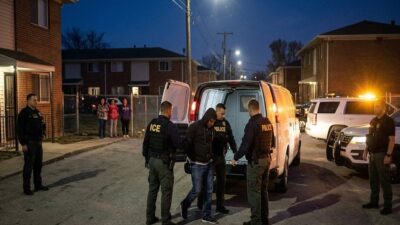
With Congress completely deadlocked, the Trump administration has been forced to seek creative, if temporary, solutions to mitigate the disaster at the airports. In a highly unusual move, the administration deployed ICE agents and other Homeland Security personnel directly to airport security checkpoints to assist the overwhelmed TSA staff. Currently, ICE agents have begun stepping in to check traveler IDs, an effort to speed up the bottleneck at the front of the line so TSA officers can focus solely on screening baggage and passengers.
President Trump has warned Congress to end the shutdown or face “very drastic measures,” noting that the deployment of ICE “makes a big difference” at the airports. However, the reality on the ground tells a slightly more complicated story. While the addition of ICE agents has provided a minor logistical relief, it has fundamentally failed to break the broader impasse or permanently end the long lines. You simply cannot replace the institutional knowledge and specific screening training of 500 departed TSA agents overnight.
Furthermore, deploying ICE to airports has only inflamed the political rhetoric in Washington. It has triggered anxieties within the Democratic party, with centrists worrying that the visual of a TSA meltdown will undercut their bargaining position, while progressives are enraged by the very presence of ICE agents interacting with domestic travelers. The administration’s move is a tourniquet on a gaping wound. It keeps the patient—our aviation system—barely alive, but it does absolutely nothing to cure the underlying disease of congressional dysfunction.
The True Cost to American Families
Beyond the political finger-pointing and the tactical deployments, we must focus on what this means for the everyday American. We are a nation built on mobility, commerce, and connection. When the government fails to provide the basic service of a functioning, secure aviation system, it is breaking a fundamental social contract with its citizens.
Mothers are missing the births of their grandchildren. Small business owners are missing crucial client meetings that keep their operations afloat. Hardworking families who saved for years for a spring vacation are seeing their dreams evaporate in a six-hour security line in Houston, Atlanta, or Chicago. Furthermore, we must deeply consider the national security implications. When security personnel are overworked, stressed, unpaid, and rushed, mistakes are inevitable. A secure nation requires a focused, supported, and adequately staffed security apparatus.
The ongoing DHS shutdown is not just a story about missing paychecks, as tragic as that is for the officers involved. It is a story about a political faction willing to hold the American traveler hostage to achieve a partisan victory on immigration enforcement. Until Washington realizes that securing our borders and securing our airports are twin pillars of the exact same mission—protecting the homeland—American families will be the ones left sitting on their luggage, waiting for the adults in the room to finally show up to work.
Frequently Asked Questions
Why are TSA wait times currently so long?
A partial, six-week shutdown of the Department of Homeland Security (DHS) has resulted in missed paychecks for TSA agents. Exhausted and facing financial hardship, nearly 500 airport security staff have quit, leading to severe understaffing and wait times of up to six hours at major airports.
What are Democrats demanding in exchange for funding the DHS?
Senate Democrats are tying DHS funding to heavy restrictions on Immigration and Customs Enforcement (ICE). Their demands include forcing ICE agents to obtain judicial warrants before entering private property and prohibiting them from wearing protective masks during operations.
How is the Trump administration trying to fix the airport lines?
The administration has temporarily deployed ICE agents and other DHS personnel to major airports to help alleviate the bottleneck. These agents are primarily assisting by checking traveler IDs so that the remaining TSA officers can focus strictly on security screening, though wait times still remain historically high.
This article was produced with AI assistance and reviewed by a human editor for accuracy and clarity. For more about our editorial standards, visit our About page.