

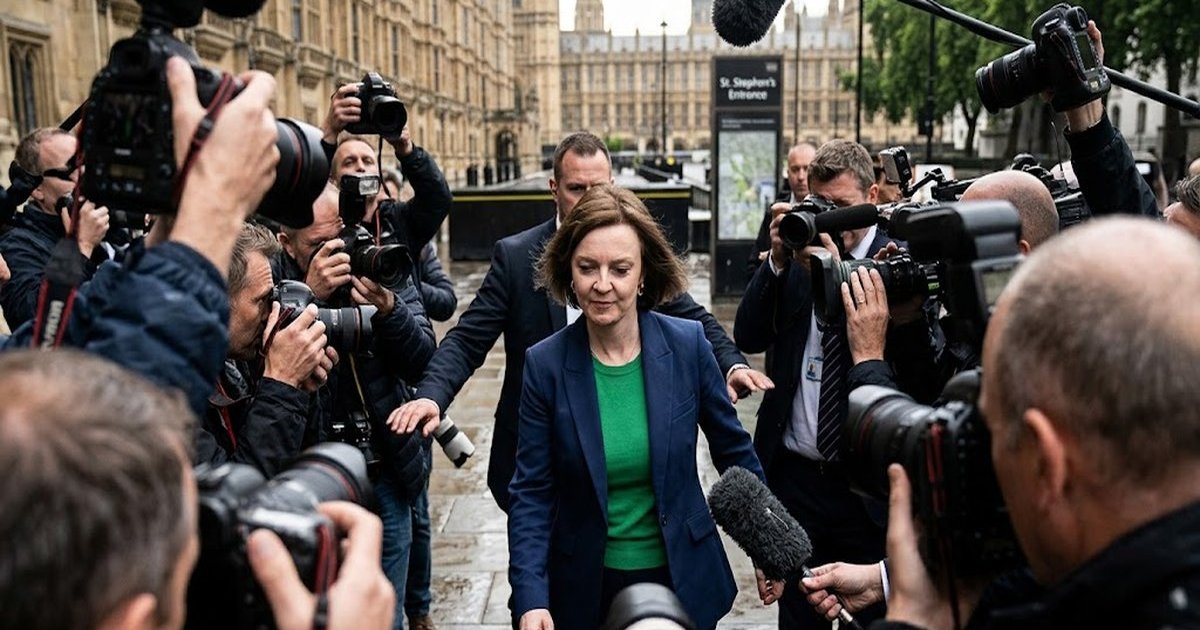
When American forces step onto the battlefield to defend Western interests, they historically look to their right and see British allies standing shoulder to shoulder with them. That historic “Special Relationship” now appears fractured, not by a lack of military capability, but by a chilling domestic reality inside the United Kingdom. According to former British Prime Minister Liz Truss, the UK government is explicitly refusing to support President Donald Trump’s ongoing military operations against Iran because British leadership feels compelled to “appease British Islamists.”
Speaking at the Conservative Political Action Conference (CPAC) in Dallas, Texas, Truss delivered a sobering warning to American audiences. The Washington Examiner reports that Truss outlined exactly why NATO allies, and specifically the UK, have grown conspicuously silent since President Trump initiated major combat operations and massive joint U.S.-Israeli strikes against the Iranian regime on February 28. Britain has essentially paralyzed its own foreign policy to avoid angering radicalized domestic factions. For conservative American women watching from home, this is a glaring warning: when a nation loses control of its own cultural and sovereign identity, it inevitably loses its ability to defend itself and its allies on the world stage.
The Danger of Domestic Appeasement
The implications of Truss’s statements are profound. We are no longer just looking at a geopolitical disagreement over military tactics; we are witnessing the ideological capture of a major Western power. The Washington Examiner’s coverage of the Dallas CPAC highlights a terrifying reality for Europe. If the British government cannot support a strike against the world’s leading state sponsor of terrorism because they fear a domestic uprising from Islamist factions within their own borders, Britain has already compromised its national security.
American families understand that weakness at home projects vulnerability abroad. President Trump has drawn a stark contrast to the European approach. Rather than caving to international hand-wringing or domestic protests, the administration is moving decisively. While the United Nations watches from the sidelines—with U.N. Secretary-General Antonio Guterres demanding an end to the conflict and calling the fighting “out of control,” according to Breitbart—the American military is actively working to neutralize a threat that has destabilized the Middle East for decades.
Truss’s admission pulls back the curtain on the real reason international coalitions often fail. It is not always a matter of military logistics; it is often a matter of moral courage. When leaders prioritize the appeasement of radical domestic groups over global security, adversaries notice. And right now, Tehran is watching London fold.
Trump Forces the Issue: ‘Get Serious’
While European allies hesitate, President Trump is applying maximum pressure. According to Fox News Politics, the President recently utilized Truth Social to issue a blunt ultimatum to Iranian negotiators: “get serious” about a deal to end the war, or face a situation with “no turning back.” He characterized the Iranian delegation as “strange” and made it clear that the United States dictates the timeline, not Tehran.
The rhetoric is backed by serious military mobilization. Reports from Axios, The New York Times, and Reuters indicate that the Pentagon is currently reviewing options for a massive “final blow.” The U.S. military is reportedly moving 2,000 troops from the 82nd Airborne Division, alongside Marine units, directly into the Middle East. President Trump explicitly noted to the Washington Times that Iran is the one “begging to make a deal” because their military infrastructure is reeling from American and Israeli strikes.
This conflict has inevitably spilled over into intricate proxy battles. The Washington Examiner notes that Hezbollah, acting as Iran’s proxy in Lebanon, broke a fragile November 2024 ceasefire by launching a barrage of missiles against Israel on March 2. This expanded the scope of the U.S.-Israeli operation, requiring a decisive hand. While analysts tell the Washington Examiner that recent talk of “imminent peace” from both Trump and Israeli Prime Minister Benjamin Netanyahu might be strategic diplomatic maneuvering, the reality on the ground shows an administration fully prepared to finish what it started if negotiations fail.
Furthermore, the New York Post reports that Trump firmly stated he is not “desperate” to make a peace deal, adding simply, “I don’t care.” This negotiation tactic strips Iran of its leverage. By demonstrating that America is fully willing to utilize military force to its logical conclusion, Trump places the burden of survival entirely on the Iranian regime. ABC News confirms that Iranian state TV announced the rejection of a U.S. peace proposal, listing five demanding conditions. In response, the White House prepares its final military options.
The Kitchen Table Impact: Groceries and Gas Prices
While the geopolitical chess match plays out in the Middle East and European capitols, American families are about to feel the impact directly in their wallets. This is where international conflict meets the American kitchen table. We cannot look at a war in Iran merely as a distant foreign policy issue; it is an active threat to our domestic supply chains.
As National Public Radio (NPR) and CNBC report, the war with Iran has severely disrupted commerce through the Strait of Hormuz. While most Americans immediately associate the Middle East with oil, the blockage is rattling another absolutely vital commodity: fertilizer. Bloomberg and the Wall Street Journal emphasize that nations are currently racing to secure enough fertilizer to prevent a global food crisis.
For American farmers, this conflict could not happen at a worse time. The blockade directly disrupts fertilizer exports precisely as our agricultural heartland prepares for the critical spring planting season. If farmers cannot access affordable fertilizer, crop yields will plummet. When supply drops, prices skyrocket. Local news outlets like KATU are already warning that grocery prices are poised to rise significantly as the war drives up both fuel and fertilizer costs. The American homemaker, already exhausted by years of volatile inflation, must prepare for another hit at the supermarket checkout line.
Moreover, the financial markets may be burying their heads in the sand. Bob Elliott of Unlimited Funds told MarketWatch that investors are remaining “dangerously complacent” about the potential blowback from this conflict. Elliott warns that current markets are not fully reflecting the impending shock to oil prices. When fuel costs rise, the cost of transporting every single good in America rises. From the gas pump to the grocery store, everyday Americans will bear the economic friction of this conflict.
The Global Chessboard and Congressional Confusion
As the United States tackles this crisis without its traditional British partner, other global adversaries are taking notes. ABC News reports that Chinese President Xi Jinping is quietly watching the U.S.-Iran conflict from the sidelines. Foreign policy experts warn that this is exactly where Beijing wants to be. While America expends resources, military hardware, and political capital managing the Middle East, China is afforded breathing room to expand its own influence without American interference. The U.S. must remain vigilant that achieving victory in Iran does not inadvertently hand a strategic upper hand to the Chinese Communist Party.
Domestically, the political maneuvering in Washington D.C. continues to frustrate. According to the Washington Examiner, Congress feels “sidelined, confused, [and] disillusioned” as President Trump dispatches troops for missions in Iran. Critics complain that the administration is bypassing standard congressional approval processes. However, in the fast-paced reality of modern warfare where Hezbollah is firing missiles and Iran is threatening global shipping lanes, the Commander in Chief is utilizing executive authority to protect American interests immediately, rather than waiting for endless congressional subcommittees to debate the semantics of military authorization.
We stand at a critical juncture. Liz Truss’s admission is a stark reminder that Western civilization is fragile. When our closest allies prioritize the feelings of radical domestic populations over global security, the United States is forced to carry the burden of the free world almost entirely alone. President Trump is demonstrating that he is willing to do exactly that, preparing a “final blow” while demanding adversaries get serious at the negotiating table.
For the conservative American woman, the mandate is clear: we must support strong national defense, prepare our households for the incoming economic ripple effects at the grocery store, and recognize that the preservation of our own culture is the ultimate prerequisite for national security. We cannot afford to follow the UK’s path of appeasement.
Frequently Asked Questions
Why did Liz Truss claim the UK is not supporting the US in Iran?
Former British Prime Minister Liz Truss stated at the CPAC conference in Dallas that the UK government is refusing to back American strikes on Iran in order to “appease British Islamists.” She suggests domestic radical pressure has compromised Britain’s foreign policy.
How will the conflict in Iran affect my family’s grocery bills?
The war has disrupted shipping through the vital Strait of Hormuz, causing a massive disruption in global fertilizer exports. With U.S. farmers struggling to get fertilizer right before planting season, crop yields are threatened, which will likely drive up food and grocery prices nationwide.
What does the Pentagon mean by a “final blow” against Iran?
Reports indicate the White House and Pentagon are reviewing options for a massive, decisive military operation to force Iran into a peace deal. This preparation includes sending thousands of additional troops, including Marines and the 82nd Airborne Division, into the Middle East.
This article was produced with AI assistance and reviewed by a human editor for accuracy and clarity. For more about our editorial standards, visit our About page.