

A Hidden Financial Burden in Our Communities
As moms and grandmothers, we know our local public schools are the heart of our neighborhoods. We invest our tax dollars and volunteer at bake sales because we believe in American education. But there’s a financial crisis unfolding in our school districts. Issues at our national borders aren’t just a distant news story anymore. They’re in our backyards, impacting where our children learn.
The national conversation around illegal immigration usually centers on border security and federal laws. However, the biggest financial hits are felt in our local public school systems. Here, in our own communities, government accountability is being put to a real test.
We need an honest, fact-based conversation about the cost of illegal immigration on schools. It’s not about blaming kids, not at all. It’s about demanding transparency from the federal government. We *need* to understand how federal policy creates such massive costs for local taxpayers. Looking at data from sources like the Congressional Budget Office can really show us the strain on our schools.
A Growing Strain on Local Classrooms and Taxpayers
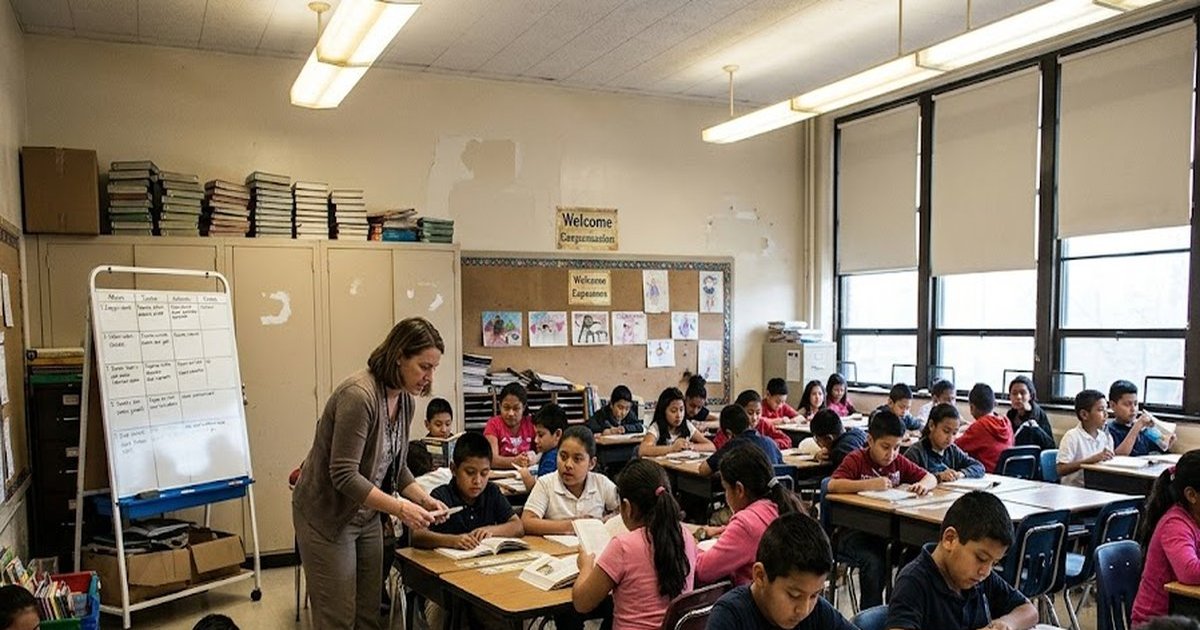
To really understand the cost, we have to look inside the school building. Especially when many new students come from homes where English isn’t spoken. Public schools mostly get their money from local property taxes and state funds. Think about that: when enrollment jumps quickly, our communities are on the hook to pay the bill.
The costs go far beyond just extra textbooks or desks. When migrant children join local schools, they often need special help. The biggest expense? English as a Second Language (ESL) instruction. By law, schools *have* to provide special teachers and translated materials. Hiring those instructors is expensive, and many districts are already short on teachers.
A fast increase in students also forces schools to expand. Many communities now need to buy trailers to fit everyone. No kidding! In some cases, districts have to pass new bonds to build schools earlier than planned. Those bonds? Paid for by local taxpayers.
Schools also need to hire more staff—social workers, counselors, bilingual workers who can talk with parents who don’t speak English. These services are essential, but they’re unplanned costs for local budgets. When a school board spends millions on new enrollment, that money has to come from somewhere else. It often means larger class sizes or fewer after-school activities for *all* students.
The Hard Numbers: What Government Data Reveals
We need to use hard data to see the true financial impact. Numbers from federal agencies show the heavy burden on local governments. In June 2024, the Congressional Budget Office (CBO) released a major report on this issue. The report looked at the effects of the immigration surge on local budgets for 2023.
The CBO found that the immigration surge increased state and local spending by $19.3 billion in just one year. While tax revenues did grow by $10.1 billion, the costs were much higher. This left a net cost of $9.2 billion to state and local governments in 2023, according to that CBO report. That’s a lot of money.
Including costs like school crowding, the CBO estimated the total could reach $9.8 billion. These numbers align with what was told to Congress. In January 2024, the House Budget Committee held a hearing on these costs. They noted that educating 4 million children of illegal immigrants costs tens of billions of dollars every year.
There’s a real gap between who collects taxes and who pays the bills. The federal government might see more tax revenue from a larger workforce. But state and local governments have to balance their budgets every year while paying for schools. As the CBO analysis confirms, immigration raises federal revenue, but increases local costs a whole lot more.
The Unfunded Mandate: Understanding Plyler v. Doe
Local property taxpayers end up footing the bill, and it’s largely because of a Supreme Court case called Plyler v. Doe. Back in 1975, Texas tried to stop state funds from going to schools for children who weren’t legally admitted into the U.S. But in 1982, the Supreme Court ruled, 5-4, that this violated the Constitution.
Plyler v. Doe essentially says schools can’t deny students an education based on their status. Since that ruling, public schools have been legally required to enroll every child in their district. It doesn’t matter how they got here.
From a conservative perspective, Plyler v. Doe is a massive, unfunded mandate. The federal government has the power to secure the border. But when they fail to manage the border, they don’t pay the price. Instead, the financial fallout gets passed to local school boards and property taxpayers.
Local mayors and school board members can’t control federal immigration policy. They can’t deport anyone or secure the border. But they’re legally bound to pay for school services for everyone who arrives. It stops local taxpayers from controlling their own budgets. Classic misdirection, wouldn’t you say?
What This Means for Everyday American Families
For American families, these billions and court cases mean real consequences. We feel it when we get our annual property tax bills. In many states, school funding is the biggest chunk of a homeowner’s tax bill. When schools need more money for ESL programs, they have to ask for tax hikes or stretch resources thin.
When resources are thin, every student in the district feels it. It means larger class sizes and less one-on-one time with teachers. It means money for honors programs or special education might get cut. Just to balance the budget.
This issue also affects the rule of law. A system that requires higher taxes to pay for illegal immigration hurts public trust. American families are compassionate and want every child to succeed. But compassion can’t be funded by endlessly squeezing the local taxpayer without limits.
As citizens, we must demand transparency. We need to ask school boards for a clear accounting of how tax dollars are spent. We must push for state laws that track the financial impact of federal policies. Most importantly, we must hold our federal leaders accountable for these costs.
By staying informed, we can push for policies that respect the American taxpayer. We can ensure our schools are a place of opportunity for *all* our children. And that’s something worth fighting for.
The federal government provides very limited funding for public education overall. The vast majority of school funding—roughly 90 percent—comes from state and local taxes, meaning local property taxpayers bear the primary financial burden for educating these students.
No. Under the 1982 Supreme Court decision Plyler v. Doe, public school districts are constitutionally required to provide a free K-12 education to all children residing in their district, regardless of their immigration status.
Students with limited English proficiency require specialized instruction, known as ESL or LEP programs. This requires districts to hire certified bilingual teachers, purchase specialized curriculum materials, and employ translators, all of which significantly increase the per-pupil cost of education.