

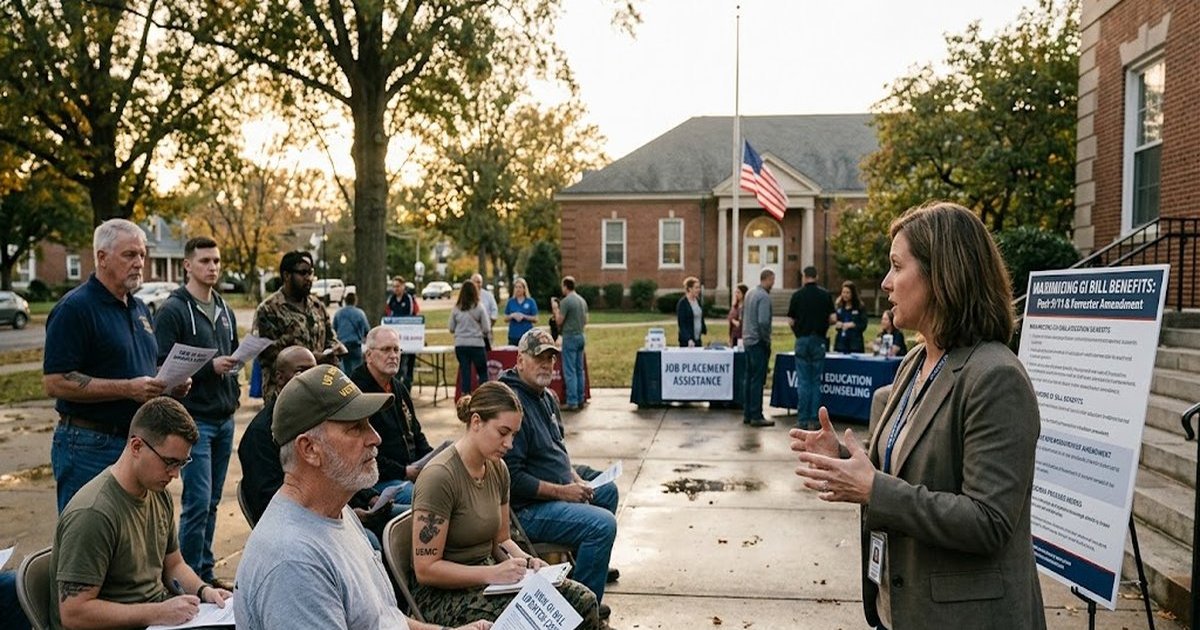
For decades, the GI Bill has been a promise to those who wore the uniform. It’s more than just a tuition check—it’s a tool for building a strong middle class and rewarding service to our country. But things are changing. As we move through 2026, new court cases and government updates are reshaping how veterans and their families access the help they earned.
If you’re a veteran or a military spouse, you know keeping up with the VA can feel like a full-time job. You want to make sure your kids or grandkids get every bit of help possible. This year, there’s some good news about how many months of school the government will pay for. Plus, there are new rules about how you need to “check in” to get your monthly housing money.
More Months of Benefits for Many Veterans
One of the biggest changes this year came from the courtroom, not Congress. A 2024 Supreme Court case called Rudisill v. McDonough kicked off a chain reaction. For years, the VA told veterans they had to pick between two different plans: the Montgomery GI Bill or the Post-9/11 GI Bill. Most were told they could only use 36 months of benefits total. That’s a lot of money, and a lot of potential lost education.
That’s changed. According to a 2026 update from the Military Officers Association of America (MOAA), many veterans can now use up to 48 months of combined benefits. Think about that – two extra years of schooling! This is a huge win for those wanting to go back for a master’s degree or a specialized trade. The VA recently said it’ll now automatically review files for veterans with less than three months of benefits left to see if they qualify for the extra time.
This fix addresses a long-standing complaint about government red tape. Veterans Education Success noted in a 2026 legislative report that the GI Bill should be a “stamp of approval” for quality education. By letting veterans access more of the benefits they earned through multiple tours of duty, the government’s finally honoring the full length of their service. It ensures those who served the longest aren’t capped by the same limits as those who served one term. No kidding.
New Monthly “Check-Ins” Required
While some rules are getting easier, others are getting stricter. As of January 2026, the Veterans Benefits Administration requires all students to verify their enrollment every single month. This includes veterans, but also families using the Survivors’ and Dependents’ Educational Assistance program. If you don’t “check in,” the VA will hold your housing payment. Classic misdirection – they want accountability, but make the process a pain.
The goal is to stop the government from wasting money on “ghost students” who drop out but keep getting checks. Senator Jon Tester recently argued in a Senate Committee hearing that Congress must “limit wasting GI Bill dollars on excessive overhead.” He noted that taxpayers and veterans both deserve a “return on investment.” By making students verify they’re still in class, the VA hopes to save millions in improper payments.
You can do this check-in through a simple text message or email. It only takes a minute, but it’s a vital step for your family’s budget. The Department of Veterans Affairs website confirms that this rule is now mandatory for everyone. It’s a shift toward accountability, something many military families want to see – our tax dollars used wisely and fairly.
Higher Payments and the Fight Over Online School
The cost of living is a major concern for everyone right now. For the 2025-2026 school year, the private school tuition cap has risen to $29,920.95, according to data from Harding University’s financial aid office. This cap helps veterans attend high-quality private colleges without going into massive debt. And the kicker? The book stipend remains at roughly $1,000 per year for those at the 100% eligibility level.
There’s also a big debate in Washington about online school. Right now, students who take all their classes online only get half the national average for housing money. According to a 2025 Pew Research study, about 25% of student veterans are enrolled in fully online programs. Many are busy parents or veterans working full-time jobs who need that flexibility. It’s hard to juggle everything.
Some lawmakers want to pay online students the full housing rate. However, others disagree. Representative Mike Bost, Chairman of the House Veterans’ Affairs Committee, has voiced concerns about the long-term cost of benefit expansions. He recently stated, “There is no place for partisan politics when it comes to veterans,” but he emphasized that new spending must be balanced to protect programs like Medicare and the VA for the future. Look, it’s a complicated issue.
Protecting the Legacy of Service
The GI Bill isn’t a handout; it’s a contract. When our young men and women sign up to serve, they’re promised a path to the American Dream. In 2026, that path looks a little different than it did for the Greatest Generation, but the principles remain the same. We must hold schools accountable and ensure the VA stays focused on the veteran.
According to the Bureau of Labor Statistics, the unemployment rate for veterans was 3.9% in early 2026. This is lower than the rate for non-veterans, which sits at 4.3%. This shows that when veterans get the education they were promised, they succeed. They find jobs, they support their families, and they lead their communities. Keeping the GI Bill strong is the best way to keep the American spirit alive.
Key Takeaways
- For 2026, the tuition cap for private and foreign schools has increased to $29,920.95 for those with full eligibility.
Frequently Asked Questions
Can I use both the Montgomery GI Bill and the Post-9/11 GI Bill?
Yes! Thanks to recent court rulings, many veterans can now use both for a total of 48 months of coverage. The VA is currently updating its systems to automatically check if you qualify for this extra year of school.
Do I really have to text the VA every month to get my money?
Yep. As of January 2026, all students must verify their enrollment each month to keep receiving housing payments. You can do it quickly via text, email, or the VA’s online portal – it’s worth it to avoid any delays in your check.
How much will the GI Bill pay for a private college in 2026?
For the current academic year, the national cap for private school tuition and fees is nearly $30,000. If your school is more expensive, you may be able to use the Yellow Ribbon Program to cover the rest of the cost.