

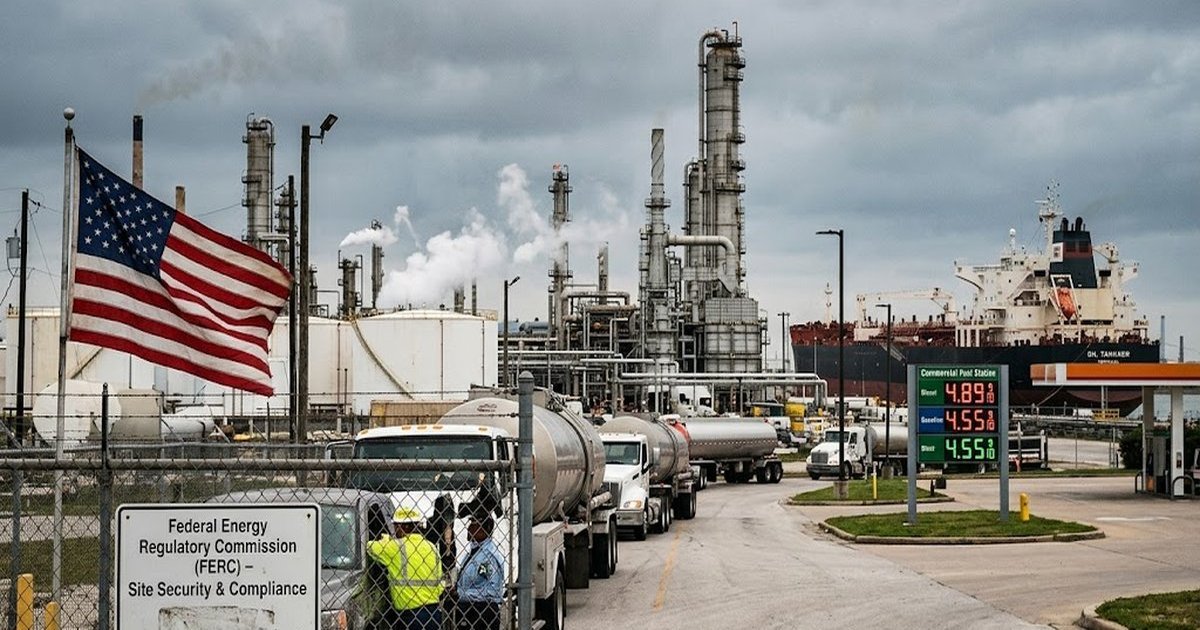
The Kitchen Table Reality of Energy Policy
For the American woman managing a household, energy policy is never just an abstract political debate—it is simple math calculated at the kitchen table. Every month, millions of families sit down to map out their expenses, balancing mortgage payments, grocery bills, and childcare. In recent years, one line item has consistently threatened to derail those carefully planned budgets: the cost of energy. When the price of gasoline and home utilities surges, it dictates exactly what is left over for family savings, college funds, or supporting local businesses. These are not luxury expenses; driving to work, dropping the kids off at school, and heating our homes are the non-negotiable necessities of daily life.
According to the Bureau of Labor Statistics (BLS) Consumer Expenditure Survey, American families have faced an unprecedented whiplash in energy costs over the last few years. In 2022, as broader inflation gripped the economy, the average household’s annual spending on gasoline skyrocketed to $3,120. That represented a staggering 45 percent increase from the previous year. While energy markets naturally experience seasonal fluctuations, the baseline cost of keeping a family moving remains an outsized burden on the middle class. The persistent anxiety over fuel prices leaves many Americans wondering: in a nation as resource-rich as the United States, why does it cost so much to fill up the family minivan?
The narrative frequently fed to the public by mainstream commentators is that high prices at the pump are simply the unavoidable result of volatile global markets or corporate greed. However, a factual examination of federal data reveals a very different story. The reality is that domestic energy costs are heavily influenced by deliberate policy choices and bureaucratic red tape. By artificially restricting our own capacity to produce and transport fuel, federal policies are placing an unnecessary squeeze directly on the American family.
By the Numbers: Red Tape vs. American Supply
If you watch the evening news, you are likely to hear claims that overall U.S. energy production is higher than it has ever been. On the surface, this is statistically true. According to the U.S. Energy Information Administration (EIA), the United States produced a record 13.2 million barrels of crude oil per day in 2024. But presenting this single statistic without the proper context is highly misleading and ignores the full picture of America’s energy potential.
The critical detail lies in where that oil is being produced. The vast majority of this record-breaking production growth has occurred on private and state lands, particularly in the prolific Permian Basin spanning Texas and New Mexico. On these non-federal lands, private enterprise and state-level pro-growth policies have allowed the industry to innovate and expand. However, where the federal government maintains direct control—on public lands and in offshore waters—the story is one of severe restriction, delay, and missed opportunity.
Data analyzed by Resources for the Future from the Bureau of Land Management (BLM) exposes a stark and undeniable shift in federal policy. Under previous administrations that prioritized American energy dominance, oil and gas leasing on federal lands averaged between 1.1 million and 2.2 million acres per year. Recently, however, those lease sales have plummeted to a historically low range of just 75,000 to 249,000 acres annually. This represents a drastic constriction of future energy exploration.
Why do these acreage numbers matter today if they represent future drilling? Because energy markets are forward-looking. Oil and natural gas exploration requires years of strategic planning, permitting, and billions of dollars in capital investment. When the federal government signals that it will refuse to lease lands for future development, it sends a chilling message to the global energy market. By intentionally choking off future domestic supply lines, unelected bureaucrats guarantee that energy markets remain tight and highly vulnerable to international disruptions. It is a fundamental law of economics: when the government artificially restricts future supply, prices rise for the consumer today.
The Hidden Tax: The Domino Effect on Your Family’s Budget
The pain of restrictive, anti-energy policies does not stop when you drive away from the gas pump; it follows you into the grocery aisles, the local pharmacy, and the hardware store. High energy costs act as a hidden, regressive tax on virtually everything American families consume. For those living in rural communities or suburbs, where driving longer distances is a basic requirement of life, this hidden tax is even more devastating.
Consider the complex logistics of the American supply chain. Almost every product available in a modern grocery store—from fresh dairy and produce to baby formula and household goods—is transported across the country by diesel-powered trucks. When federal policies restrict domestic refining capacity and limit the future availability of crude oil, diesel prices remain stubbornly elevated. These increased transportation costs are rarely absorbed by large corporate conglomerates; instead, they are passed directly down the line to the consumer in the form of higher retail prices at the checkout counter.
This domino effect is clearly visible in federal inflation data. Surges in household energy and transportation costs frequently mirror the increases we see in food prices. When we limit our own domestic energy capabilities through heavy-handed regulation, we are effectively voting to make our own groceries more expensive. Families are forced to stretch their dollars further, often sacrificing savings or discretionary spending just to cover the basic necessities of survival.
Furthermore, these restrictions harm the financial health of our local communities. A Congressional Research Service (CRS) report highlighted that federal oil and natural gas leasing revenue topped $8.49 billion in 2023. By law, a significant portion of these revenues is disbursed back to the states where the production occurs. These funds are vital; they are used to build public infrastructure, support local school districts, and fund vital conservation programs. When federal leasing is stalled, states lose out on this critical revenue. To make up for the shortfall, local governments are often forced to raise property or sales taxes on everyday Americans, compounding the financial pressure on already stretched family budgets.
Infrastructure Bottlenecks and Bureaucratic Delays
Beyond the restriction of lease sales, the war on affordable energy is waged through the labyrinth of federal permitting. Even when energy companies secure the rights to produce oil and natural gas, they must be able to transport those resources to refineries and ultimately to consumers. This requires a robust, modernized network of pipelines.
The EIA has explicitly noted that the completion of new natural gas pipelines is vital for market efficiency. It allows producers to transport the natural gas that is extracted alongside crude oil, removing significant constraints on overall production. Yet, over the past several years, the approval process for critical infrastructure has been bogged down by endless environmental reviews, regulatory red tape, and politically motivated litigation. Projects that should take months to approve are dragged out over years, or canceled altogether due to regulatory uncertainty.
When we fail to build and maintain adequate pipeline infrastructure, we bottleneck our own energy supply. This not only keeps prices high for American consumers but also forces the transportation of oil via less efficient and more costly methods, such as rail or truck. Streamlining the permitting process is not about cutting corners on safety; it is about cutting the bureaucratic dead weight that prevents American resources from reaching American citizens efficiently.
Restoring Constitutional Accountability and Common Sense
At the very heart of the energy debate is a fundamental question of constitutional governance and government accountability. The Founding Fathers designed a brilliant system where laws are made by elected representatives in Congress—men and women who are directly accountable to the voters in their districts. If a policy fails, the voters have the power to replace the policymakers at the ballot box.
Today, however, a massive portion of America’s energy policy is dictated by alphabet-soup executive agencies and regulatory bodies operating far outside the purview of the voting public. From delaying pipeline permits to implementing incredibly restrictive mandates on public lands, these bureaucratic actions effectively bypass the legislative process. They impose massive, life-altering economic burdens on American families without a single vote ever being cast in the House or the Senate.
For conservative Americans who value liberty and government accountability, this executive overreach is entirely unacceptable. The Constitution did not grant unelected bureaucrats the power to legislate the American family into poverty. True energy independence and economic security mean relying on the robust, safe, and efficient development of our own natural resources, governed by clear, predictable laws passed by our elected representatives, rather than the shifting, ideologically driven mandates of federal agencies.
A Patriotic Vision for American Energy Independence
America is uniquely blessed with some of the most abundant natural resources on the planet. Utilizing these resources is not merely an issue of economic convenience; it is a profound matter of national security and patriotic pride. When we intentionally restrict our own domestic production, we inevitably become more dependent on foreign nations—many of whom do not share our values or our commitment to human rights—for our critical energy needs. We compromise our sovereignty when we have to ask the rest of the world to produce the energy that we have sitting right under our own feet.
Gas prices do not have to be this high. The financial strain on the American family is a policy choice, not a permanent reality. The solution lies in embracing a pro-American, common-sense energy agenda: unlocking federal lands for responsible leasing, drastically streamlining the permitting process for pipelines and infrastructure, and returning regulatory power to Congress where it constitutionally belongs.
By cutting through the red tape and getting the federal government out of the way, we can unleash the full, unparalleled potential of the American energy sector. Doing so will immediately signal to global markets that America is back in business, helping to stabilize long-term prices, lower the cost of living for hard-working families, and ensure that our great nation remains strong, secure, and entirely self-reliant for generations to come.
Frequently Asked Questions
Why do gas prices stay high even when overall oil production is up?
While oil production on private lands has grown significantly, severe federal restrictions on public leases and pipeline infrastructure limit the market’s full potential. Global energy markets react to these long-term federal restrictions by keeping prices elevated, knowing future supply will be artificially constrained.
How does the federal lease sale process work, and why does it matter?
The federal government periodically auctions the rights to explore and produce oil and natural gas on public lands and offshore waters. Recently, these annual lease sales have been drastically reduced from millions of acres to a small fraction of that, which stifles the long-term investment needed to keep energy affordable.
Do gas prices really affect my local grocery bill?
Yes, energy costs act as a hidden tax on the entire supply chain. Nearly everything in your local grocery store is transported by diesel-powered trucks, meaning that when fuel costs rise, transportation expenses surge and are passed directly to you at the checkout counter.
This article was produced with AI assistance and reviewed by a human editor for accuracy and clarity. For more about our editorial standards, visit our About page.