
The Foundation: What Taxpayers Actually Paid For
For the last decade, the southern border wall has been one of the most debated, scrutinized, and misunderstood infrastructure projects in American history. If you watch the evening news or scroll through mainstream media feeds, you might be led to believe that the wall is an archaic concept, a waste of taxpayer money, or a project that never even got off the ground. But as conservative women, mothers, and taxpayers, we know that the media rarely tells the whole story.
We care about the safety of our neighborhoods, the stability of our local economies, and the rule of law. Just as we lock our front doors at night to protect our children, a sovereign nation must secure its borders to protect its citizens. Setting aside the political theater, it is time to look at the hard data from government watchdogs to understand what was built, where our tax dollars went, and whether physical barriers actually keep our communities safe.
One of the most persistent myths pushed by critics is that “nothing was built” during the aggressive push for border security between 2017 and 2021. The data proves otherwise. According to the Government Accountability Office (GAO), the federal government successfully installed approximately 458 miles of border barrier panels across the Southwest border during this four-year period.
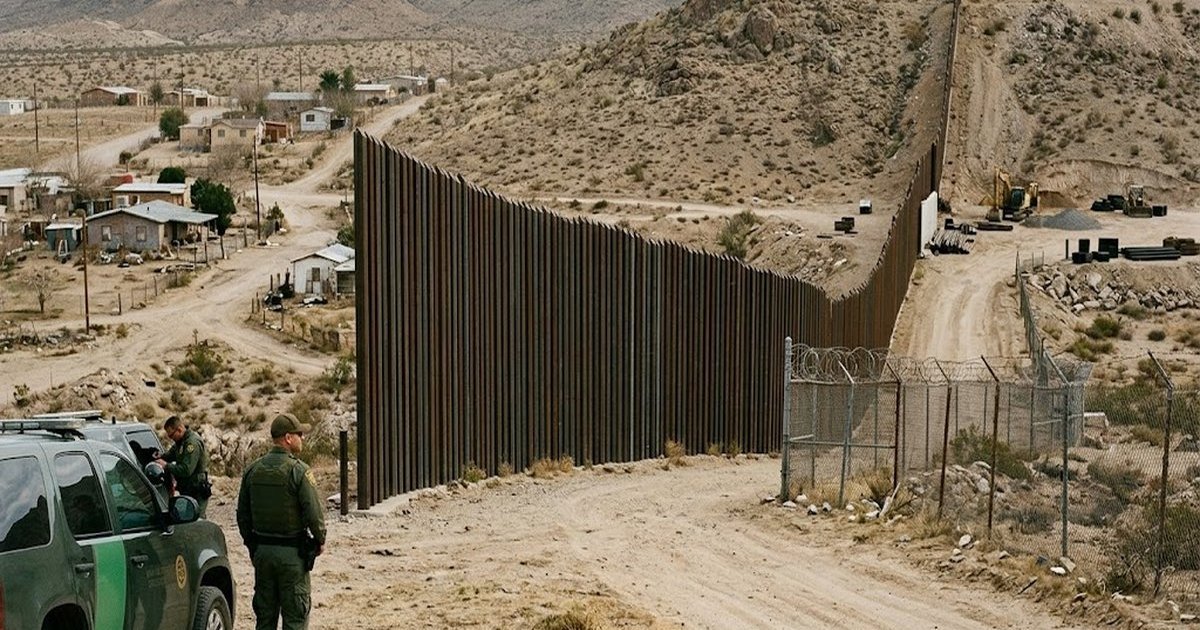
This construction was not a simple chain-link fence. The U.S. Army Corps of Engineers oversaw the installation of a comprehensive “barrier system.” This system included 30-foot, concrete-filled steel bollards designed to be anti-climb and anti-cut. Alongside the physical steel, the system integrated high-speed all-weather patrol roads, high-intensity lighting, and advanced fiber-optic sensors to detect underground tunneling. Critics often try to diminish this achievement by claiming much of it was “replacement” wall. But to the Border Patrol agents on the ground, replacing a three-foot-high, dilapidated vehicle barrier with a 30-foot steel wall completely changes the operational reality for law enforcement.
Building this infrastructure was a massive undertaking. A GAO report noted that the Army Corps of Engineers obligated $10.7 billion to support border barrier efforts between fiscal years 2018 and 2020. As taxpayers, we made a substantial investment in our national security, and for those 458 miles, we got a formidable obstacle that funneled illegal traffic toward controlled ports of entry.
The Pause: A Lesson in Government Accountability
The progress at the border came to a screeching halt in January 2021. On his first day in office, President Biden issued a proclamation to pause all border wall construction. For taxpayers who value government accountability and the constitutional separation of powers, what followed was deeply concerning.
Congress holds the “power of the purse,” meaning that when lawmakers appropriate funds for a specific purpose, the executive branch is expected to execute that mandate. In Fiscal Year 2020, Congress specifically appropriated nearly $1.4 billion for the construction of a barrier system along the southwest border. However, rather than finishing the miles of wall that had already been paid for, the new administration halted the bulldozers.
A comprehensive 2024 GAO report investigated whether the administration violated the Impoundment Control Act of 1974 by blocking these funds. While the GAO determined that the administration did not technically break the law through intentional blockage, the report revealed that the Department of Homeland Security (DHS) had left over $660 million unobligated. Instead of pouring concrete and raising steel, the administration diverted the vast majority of the remaining taxpayer funds toward “environmental planning” and site remediation.
Imagine hiring a contractor to fix your leaking roof, handing over your hard-earned money, and then watching them use those funds to study the environmental impact of your gutters while your house floods. That is essentially what happened at our southern border. Millions of dollars’ worth of steel bollards were left to rust in the desert sun, prompting states like Texas and Missouri to file lawsuits alleging that the federal government was ignoring the intent of the law.
The Proof: Why Physical Barriers Matter for Everyday Americans
The policy shift in 2021 brought immediate and devastating consequences, proving unequivocally that physical barriers are a necessary component of national security. When construction stopped and enforcement policies were relaxed, the border descended into chaos.
The numbers are staggering. According to Customs and Border Protection (CBP) data analyzed by Pew Research, the U.S. recorded a record-shattering 2.2 million migrant encounters in fiscal year 2022, followed by another 2 million in fiscal year 2023. In December 2023 alone, Border Patrol agents encountered nearly 250,000 illegal crossers—the highest single month on record.
This was not just a crisis for border towns; it became a crisis for every town in America. When the border is overwhelmed, the cartels exploit the gaps. Illicit drugs, particularly fentanyl, flooded across the unsecured sections of the border, poisoning our communities and devastating families. In fiscal year 2024, CBP seized nearly 22,000 pounds of fentanyl nationwide. A secure border is a matter of life and death for our youth.
The tragedy is that we know barriers work. Before the construction was halted, the DHS compiled data proving the effectiveness of the new wall systems. In a 2020 report cited by the House Budget Committee, DHS confirmed the undeniable success of physical infrastructure:
- In the Yuma Sector, illegal entries plummeted by over 87% in areas where the new border wall system was constructed.
- In the Rio Grande Valley Sector, apprehensions decreased by 79% in areas where the wall was completed.
- In the El Paso Sector, apprehensions dropped by 81% in the first half of fiscal year 2020 compared to the previous period.
These statistics validate common sense. A 30-foot steel wall does not solve every problem, but it serves as a critical force multiplier. It slows down cartels, deters human smugglers, and gives our overworked Border Patrol agents the precious time they need to respond and intercept threats.
The Path Forward: Resuming Construction and Restoring Order
Fortunately, common sense is making a return. Recognizing the unsustainable nature of the border crisis, construction of the U.S.-Mexico border wall officially resumed in key states like Texas and California in 2025. This return to a posture of enforcement is already yielding historic results.
The correlation between strict enforcement, physical barriers, and a drop in illegal immigration is undeniable. According to a recent Pew Research report, the total number of migrant encounters in fiscal year 2025 plummeted to 237,538. This is a monumental shift, representing the lowest number of encounters in any fiscal year since 1970.
This drastic reduction is proof that the crisis was entirely solvable. When a nation decides to enforce its laws, close the loopholes, and build the necessary physical infrastructure, order can be restored rapidly. The resumption of wall construction sends a clear, unambiguous message to the world, and more importantly, to the cartels: the United States border is no longer open for illegal business.
As everyday Americans, we must continue to demand transparency and accountability from our elected officials. The border wall is more than just steel and concrete. It is a testament to our nation’s sovereignty and a promise to American families that their government prioritizes their safety, their communities, and their tax dollars. Our children deserve to grow up in a country that respects its own boundaries and enforces its own laws.
Frequently Asked Questions
How many miles of border wall were built between 2017 and 2021?
According to the Government Accountability Office (GAO), approximately 458 miles of border barrier panels were installed during this period. The vast majority of this construction replaced outdated, ineffective fencing with robust 30-foot steel bollard systems.
Did the federal government illegally defund the wall in 2021?
A 2024 GAO report found the administration did not technically violate the Impoundment Control Act, but noted they left over $660 million unobligated. Several states sued, arguing the administration violated the spirit of the law by diverting taxpayer construction funds into environmental studies instead of border security.
How effective is the physical border wall?
Department of Homeland Security data shows that physical barriers are highly effective at deterring illegal crossings. In 2020, sectors with newly constructed wall systems, such as the Yuma and Rio Grande Valley sectors, saw illegal entries plummet by approximately 79% to 87%.
This article was produced with AI assistance and reviewed by a human editor for accuracy and clarity. For more about our editorial standards, visit our About page.