
The Broken Promise of Public Education
Every child in America deserves a fair shot—that’s the American dream. But right now, our public school system is failing millions of kids. Many families are trapped in zip codes with broken schools. They have no way out. It’s not just a policy problem; it’s a civil rights crisis. Parents know what’s best for their children—government bureaucrats don’t.
Yet, our current system forces kids into schools based on where they live. Rich families can move or pay for private school. Working-class families are stuck. Think about that. It’s deeply unfair. We must fix it.
We spend a lot of money on public schools—a *lot* of money. According to the U.S. Census Bureau, public schools spent an average of $14,347 per student in 2021. In places like New York, that number is over $26,000 per student! That’s a lot of money.
Yet, the results keep getting worse. Throwing more money at a broken system doesn’t fix it. We’ve tried that for decades, no kidding. The numbers prove it’s not working.
The National Assessment of Educational Progress tracks student scores—they call it the Nation’s Report Card. According to their 2022 data, only 33 percent of fourth graders can read at grade level. Not great.
That means 67 percent of young kids are falling behind. Math scores are even worse. The same report found only 26 percent of eighth graders are good at math. Classic misdirection.
These aren’t just numbers on a page. They’re real children. They’re graduating without basic skills. They can’t fill out a job application. They can’t balance a checkbook. We’re sending them into the world with one hand tied behind their backs. This hurts our country, our families. We can’t keep doing the same thing and expecting different results.
Defining the Civil Rights Crisis of Today
Civil rights are about equal opportunity. If the state forces a child into a failing school, they deny them that opportunity. We wouldn’t accept this in any other area of life.
If a grocery store sells bad food, you shop somewhere else. Why is education different? It shouldn’t be. A bad school is a dead end.
Former Secretary of State Condoleezza Rice has spoken clearly on this. She said, “The civil rights issue of our time is the right of every parent to choose a safe, quality education for their child.” She’s absolutely right. A good education is the key to freedom. Without it, kids can’t succeed.
In the 1960s, the civil rights movement fought for access—every child to walk through the schoolhouse door. We won that fight. But access isn’t enough if the school is failing. Today, the fight is for quality.
A bad school limits a child’s earning power. It traps them in poverty. School choice levels the playing field for everyone. It gives hope back to communities that government left behind.
How School Choice Works for Everyday Families
School choice gives the power back to parents. How does it work? It allows education dollars to follow the student—it doesn’t fund a government building. It funds a child.
According to the research group EdChoice, 33 states now have some form of private school choice. These programs include vouchers and education savings accounts. They let parents use their tax dollars to pick the best school—it could be a charter school, a private school, or even homeschooling.
The Heritage Foundation tracks these laws across the country. By 2024, they reported that 11 states had passed universal school choice. Arizona and Florida led the way. Universal means every single family qualifies—it doesn’t matter how much money you make. Every parent gets a say. That’s how we put families first.
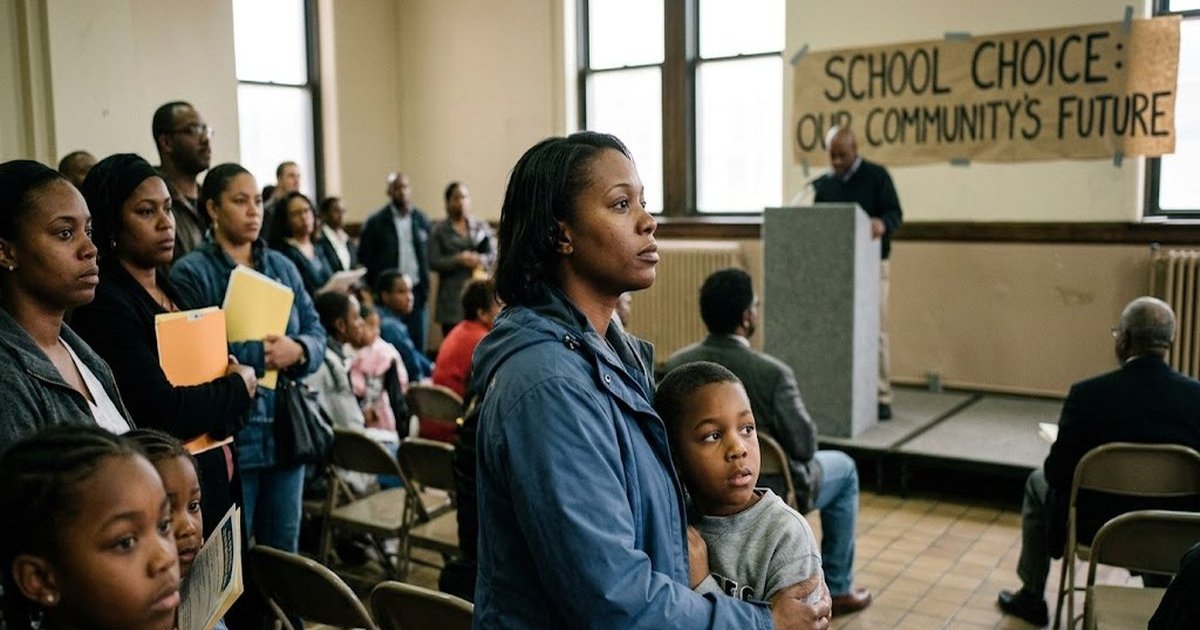
Imagine a single mom in a big city. She works two jobs to pay rent. Her son’s local public school is unsafe. Bullying is out of control. The teachers spend more time breaking up fights than teaching. She can’t afford a house in the suburbs, and she can’t afford a large tuition bill. Under the current system, her son is trapped. But with an education savings account, she has options.
She can send him to a safe, local Catholic school. He can learn discipline and math in peace. This changes his entire future. It’s happening right now in states across America. The kicker? This idea isn’t new.
The Nobel Prize-winning economist Milton Friedman first proposed it in 1955. Friedman argued that government should fund education, but not run all the schools. He believed competition would fix bad schools—and he was right.
When public schools compete, they improve. They have to listen to parents. If they don’t, they lose money. And here’s why.
The Union Roadblock to Freedom
The biggest roadblock to this freedom is the teachers’ unions. They fight school choice at every turn. They want to protect their monopoly. They care more about power than students.
The economist Thomas Sowell has studied this for decades. He’s found that when unions have a strong grip, schools often underperform. He says, “It’s not that teachers are bad people, but unions protect mediocrity.”
According to the American Federation for Children, rural public schools don’t close when choice laws pass. Instead, they get better. Parents in rural areas might use funds for online classes or special needs therapy—school choice is flexible. It adapts to what each family needs.
Defending Our Family Values
This issue goes to the heart of family values. Parents are the first teachers. God gave us our children, not the government. We have a duty to raise them right. But many public schools are teaching things that clash with our values. They push political agendas instead of teaching math and reading. They hide things from parents.
School choice lets parents say no. If a school pushes radical ideas, a parent can leave. This forces schools to respect parents again. It puts the family back in charge.
The Constitution protects our liberties—it protects our right to direct the upbringing of our children. The Supreme Court has ruled on this. In the 1925 case *Pierce v. Society of Sisters*, the Court made a clear ruling: the child is not a creature of the state. Parents have the right to choose private schools.
School choice makes that right a reality for everyone, not just the rich. We can’t wait any longer. Millions of kids are depending on us. They need a way out of broken schools today.
School choice is the only policy that puts children first. It is time to break the government monopoly. It is time to trust parents.
When we give parents the power to choose, we give kids the power to succeed. That is true freedom. That is the civil rights victory our generation must win.
Key Takeaways
- School choice empowers parents to direct education for their children.
Frequently Asked Questions
What is an Education Savings Account (ESA)?
An ESA is a state-funded account that gives parents direct control over their child’s education money. Parents can use these funds for private school tuition, online courses, or special needs therapy. This puts families, not the government, in charge of learning.
Does school choice take money away from public schools?
No, it does not. Public schools still receive local and federal tax dollars, and per-student funding often increases when a child transfers. Competition actually encourages public schools to improve their standards to keep students.
Why is school choice considered a civil rights issue?
Every child deserves a quality education, regardless of their zip code or family income. Forcing kids to stay in failing neighborhood schools denies them equal opportunity. School choice levels the playing field so all children can achieve the American dream.