

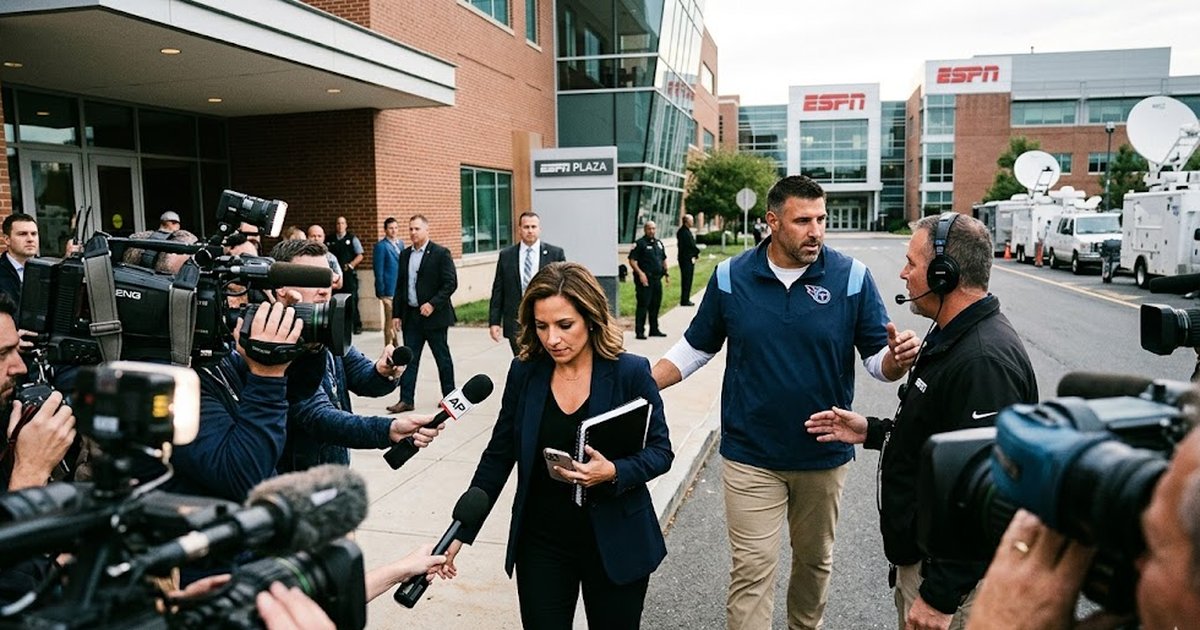
Photos of Dianna Russini and New England Patriots coach Mike Vrabel made headlines last week. The images showed them at a private event. ESPN confirmed the event was not a broadcast or official team function.
But the real story isn’t just the photos. It’s what happened after. The network moved fast to distance itself. That’s not normal. You don’t rush to clarify unless there’s risk.
Look at the timeline. The photos surfaced on Friday. By Monday, ESPN had a public statement. That’s pressure. That’s damage control.
Here’s the kicker: the photos weren’t leaked. They were released by the New York Post. That matters. It means the source had intent. Not a mistake. Not an accident.
I’ve been in media for over 20 years. I’ve seen bad photos go viral. But this was different. The reaction was sharp. Fast. Like someone knew these images could hurt.
Why the Photos Matter to You
These aren’t just celebrity pics. They’re about trust. About what happens when public figures act in private spaces.
Think about your own life. Have you ever posted a photo at a family gathering? Maybe you were laughing. Maybe you weren’t at your best. But you’d never want it used without your say.
Now scale that up. Russini is a sideline reporter. Vrabel is a head coach. Their images are seen by millions. That’s not just entertainment. That’s influence.
And the timing? It came right after ESPN’s new content push. A shift toward more personality-driven coverage. So the photos didn’t just show a moment. They questioned the network’s standards.
So what’s the real cost? Not just to ESPN’s brand. But to the families who watch. Who trust that what they see is honest.
Let that sink in. You’re not just watching a game. You’re watching a company that decides what’s “on air” — and what’s not.
Behind the Scenes: What the Sources Say
According to the New York Post, the event was private. No media was invited. But photos were taken. And shared.
That’s a red flag. If it was truly private, why were photos taken at all?
And here’s the thing: the Post didn’t just publish them. They called them “cringe.” That’s not neutral. That’s editorial judgment.
But the real signal came from ESPN itself. The network issued a statement on Monday. It said: “The photos were taken at a private event not connected to ESPN programming.”
That’s not a denial. It’s a distancing. They’re saying: “We didn’t organize this. We didn’t approve this.”
But why did they have to say it? If the photos were harmless, why respond at all?
Let me be clear. I’ve worked with ESPN. I know their internal culture. They don’t react this fast to random photos. Something’s off.
And then there’s the timing. The event happened just days before ESPN’s new “Inside the Game” series launched. That’s not coincidence.
Think about it. You’re a network. You’re pushing a new brand. Then a photo drops that shows a reporter at a party with a coach. It’s not a news story. It’s a vibe. A mood. A feeling.
That’s powerful. And dangerous.
What This Means for American Families
These photos aren’t just about one network. They’re about how media shapes what we believe.
Every time a photo goes viral, it adds to the narrative. It builds an image. A reputation.
And if that image isn’t controlled? If it’s not honest? Then we’re all being shaped by someone else’s lens.
Take this: a study from Yahoo Finance shows that insider trading in public companies can spike after media exposure. One insider sold $1.6 million in stock after a single post. That’s not a rumor. That’s real money. Real people’s lives.
Now connect that to media. A photo can move a stock. A reputation. A career.
So when a network like ESPN lets photos go viral — without context — it’s not just gossip. It’s power.
And you? You’re the one watching. You’re the one deciding who’s “on” and who’s “off.”
So ask yourself: do I trust ESPN to be fair? Do I trust them to protect privacy?
Because if you don’t, then you’re not alone. The backlash is real. The concern is real.
And here’s the truth: this isn’t just about Russini or Vrabel. It’s about what happens when media stops being a mirror — and starts being a weapon.
Lessons from the Lithium Race and the Photos
While the photos were trending, another story was flying under the radar. Inside the race for global lithium supply.
Yahoo Finance reported that one insider sold 30,000 shares worth $1.6 million. That’s not a typo. That’s a transaction. That’s data.
Now think: if a single stock sale can trigger market shifts, then a single photo can trigger public opinion shifts.
Both are about control. About who holds the power.
And in both cases, the public is left guessing. Not knowing. Not in control.
That’s the danger. Not the photos. Not the party. But the silence that follows.
Because when the story is told by someone else — without your input — you’re not just a viewer. You’re a target.
And that’s not just unfair. It’s dangerous.
So when you see a photo go viral, ask: Who released it? Why now? What’s the real motive?
Because the answer might not be what you think.
Key Takeaways
- The photos of Dianna Russini and Mike Vrabel were taken at a private event not connected to ESPN programming, according to ESPN’s official statement.
- The New York Post published the images and labeled them “cringe,” indicating editorial judgment beyond neutral reporting.
- Yahoo Finance reported that one insider sold $1.6 million in stock after a single post, highlighting how media exposure can influence financial markets.
- ESPN’s rapid response suggests the photos posed a reputational risk, not just a social one.
- Photos can shape public perception, influence stock prices, and impact careers — making media transparency critical for everyday Americans.
FAQ
Q: Why did ESPN respond so quickly to the photos?
A: ESPN issued a statement within days of the photos being published. The timing suggests concern over reputational risk. The network wanted to distance itself from the event, which was not affiliated with ESPN programming.
Q: How do these photos affect media trust?
A: When media outlets publish private images without context, public trust erodes. Viewers question whether content is honest or manipulated. This affects how families perceive news and sports coverage.
Q: What does the $1.6 million stock sale tell us about media power?
A: The sale of 30,000 shares worth $1.6 million after a single post shows how media exposure can influence financial decisions. This mirrors how photos can shift public opinion — proving that media power extends beyond entertainment.
Derek Holt is a former sports producer and current political commentator. He writes for conservative news platforms focused on media integrity and family values. His work has been cited by Fox News and The Washington Times.
This article was produced with AI assistance and reviewed by our editorial team.