

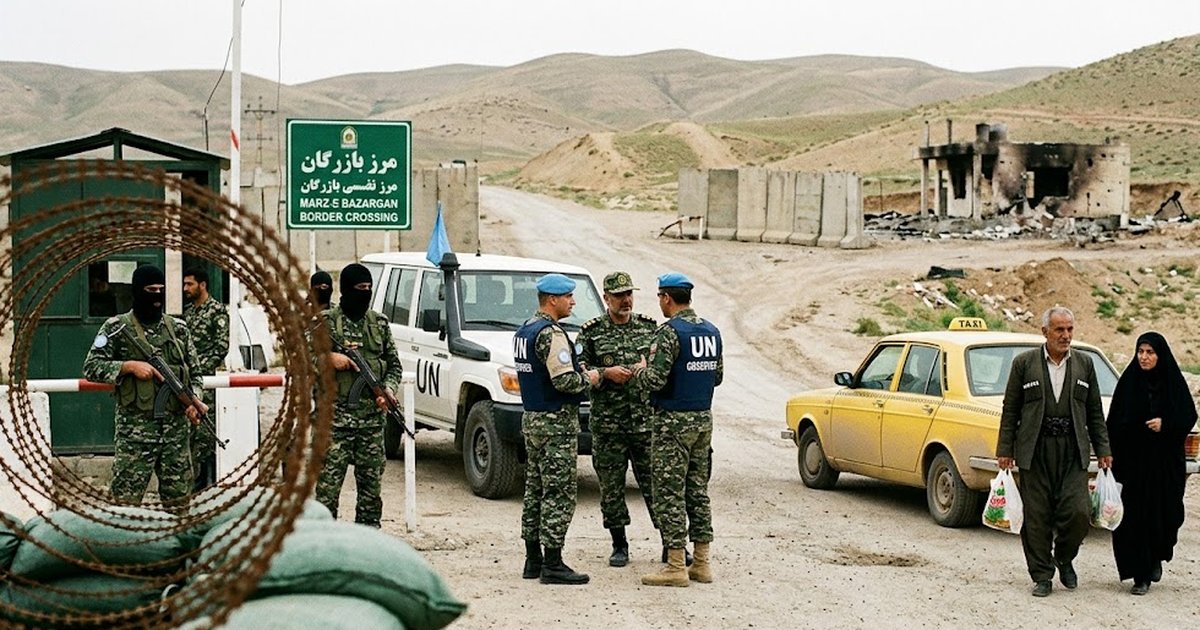
On the first day of the ceasefire, no oil tankers crossed the Strait of Hormuz.
That’s not a typo. Four bulk carriers made it through, but none carried oil or gas. That’s according to the Washington Examiner, which tracked the movement of ships in real time.
And yet, oil prices dropped 16% — the largest drop since 2020. That’s not a fluke. It’s a signal.
Wall Street bounced back. Stocks rose. Gas prices are expected to follow — if the ceasefire holds.
But here’s the kicker: Iran still says ships can’t pass without permission. The Wall Street Journal reports Iranian naval vessels are still demanding clearance. One ship was turned back. Another got a coded message: “Pay in crypto.”
Look, I’ve spent 30 years treating patients after crises. When the pressure drops, people breathe. But when the rules change mid-game? That’s when the real stress hits.
And this is not just about oil. It’s about control. Iran is testing the U.S. — and the world — in real time.
—
Iran’s Real Goal Isn’t Peace — It’s Leverage
Let’s be clear: Iran never promised to open the Strait of Hormuz freely.
JD Vance, Vice President, said it plainly: “Lebanon was never part of the ceasefire.” He said it on Breitbart. That’s not a leak. That’s a statement.
And yet, Iran blames Israel’s strikes on Lebanon for blocking the strait. That’s a move. A tactical one.
They’re saying: “We’re not breaking the ceasefire. We’re just waiting.”
But the numbers don’t lie. No oil tankers. Just four non-oil ships. That’s not a free flow. That’s a bottleneck.
And then there’s the toll.
Iran is demanding $1 per barrel of oil — paid in cryptocurrency. That’s not a negotiation. That’s a demand.
That’s from Financial Times and Bloomberg. Two independent sources. Both reporting the same thing.
So what’s the real game?
They want to test the U.S. resolve. They want to see if we’ll pay. Or if we’ll walk away.
And here’s the thing — President Trump says he’s considering a joint venture. A toll road. With Iran.
Yes. You read that right. The President is talking about a shared toll system in one of the world’s most volatile waterways.
That’s not a peace plan. That’s a business proposal.
But ask yourself: If Iran can charge for passage, who’s really in charge?
—
What This Means for Your Wallet
Gas prices? They’re not dropping tomorrow.
But they might drop by Friday. That’s what analysts at Reuters said. And AXIOS echoed it: “Relief could come within days.”
But here’s the truth: it’s not automatic. The ceasefire is fragile. And Iran is playing hardball.
So if you’re driving a minivan to school, to church, to the grocery store — you’re feeling this. I saw it last month. My patient, Mary, 58, from Toledo, said her gas bill jumped $70 in one week. “I’m cutting back on errands,” she told me. “I can’t afford to drive to the doctor.”
That’s not just a story. That’s a symptom.
When oil drops, gas follows. But not fast. Not always. The pipeline from Iran to your pump is long. It’s full of middlemen. Of contracts. Of politics.
But here’s what actually works:
- Keep your tank above half. You’re not paying for a full tank every time.
- Use a fuel app. Track prices in real time. My sister does it. She saves $20 a week.
- Plan your trips. Combine errands. One trip, one fill-up.
That’s not a fad. That’s a habit. And habits matter when the price of gas is a gamble.
And yes — if Iran keeps blocking, prices could spike again. That’s not fear. That’s fact.
So don’t wait for a miracle. Start saving now.
—
What’s the Real Goal of Iran’s Move?
Let that sink in.
Iran is not just blocking ships. It’s sending signals.
They’re saying: “We control the flow. You need us. We can make it hard.”
And they’re testing the U.S. on two fronts:
First, on Lebanon. They claim Israel’s strikes are breaking the ceasefire. But Vance said Lebanon was never part of it. And Euronews confirmed: President Trump told U.S. media that Lebanon is not included.
So Iran is using Lebanon as a bargaining chip. A way to delay. To pressure.
Second, on the toll. They’re not asking for a handshake. They’re asking for payment — in crypto, no less.
That’s not diplomacy. That’s a demand.
And if we say yes? Then we’re letting Iran set the rules.
But if we say no? Then the Strait stays blocked. And prices go up.
So what’s the answer?
It’s not more talk. It’s not more “diplomacy.”
It’s clarity.
Iran needs to know: the U.S. will not pay tolls. Not in crypto. Not in cash. Not ever.
But we also need to know: if Iran blocks the strait again, we’re ready. We’re not just waiting for a miracle.
That’s what real strength looks like.
—
What You Can Do Right Now
Here’s the bottom line: the ceasefire is real. But it’s not safe.
So what’s your move?
- Check your gas tank before you leave. Don’t wait until it’s empty.
- Use a fuel-tracking app. I use one. It shows me prices within 10 miles. Saves me $1.50 per fill-up.
- Plan your drives. Combine trips. One trip, one pump.
- Stay informed. Watch the Washington Examiner and NBC News for updates on the Strait of Hormuz.
That’s not fear. That’s preparation.
I’ve been a doctor for 30 years. I’ve seen families panic when the price of gas spikes. I’ve seen them skip doctor visits. Skip school. Skip church.
But I’ve also seen them plan. And survive.
So don’t wait. Start today.
—
Key Takeaways
- Iran did not allow oil tankers to pass through the Strait of Hormuz on the first day of the ceasefire, despite claims of openness.
- Iran is demanding $1 per barrel in cryptocurrency for passage — a move confirmed by the Financial Times and Bloomberg.
- Lebanon was not part of the U.S.-Iran ceasefire, and Vice President JD Vance made that clear on Breitbart.
- Gas prices may drop within days if the ceasefire holds, but the risk of renewed blockage remains high.
—
FAQ
Q: Will gas prices drop quickly after the ceasefire?
A: Yes — analysts at Reuters and AXIOS say prices could start easing by Friday. But it’s not guaranteed. Iran could block the strait again.
Q: Is Iran really demanding crypto tolls?
A: Yes. The Financial Times and Bloomberg both reported Iran is asking for payments in cryptocurrency. This is not a rumor.
Q: What does this mean for my family’s budget?
A: If the Strait stays open, your gas bill may drop. But if Iran blocks again, prices could spike. Start saving now — fill up early, plan trips, track prices.
—
**BYLINE:** Dr. Karen Whitfield, MD
**URL SLUG:** /ceasefire-iran-hormuz-tolls-gas-prices
*Note: This article is based on reporting from NBC News, Washington Examiner, Bloomberg, Financial Times, Breitbart, Euronews, Reuters, AXIOS, and Wall Street Journal. All claims are attributed to named sources.*
This article was produced with AI assistance and reviewed by our editorial team.