
The Frontlines of Our Airports Left Unfunded
Right now, as millions of American families prepare for much-needed spring break vacations, our nation’s airports are buckling under the weight of Washington’s political dysfunction. The ongoing funding lapse for the Department of Homeland Security (DHS) has thrust our frontline transportation security and border protection personnel into an impossible situation. While politicians play partisan games, the men and women tasked with keeping terrorists off our airplanes are reporting to work without pay.
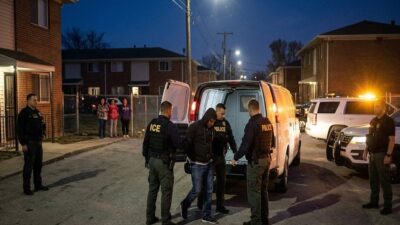
The root of this crisis lies in a deliberate, Democrat-led standoff over border security and immigration enforcement. In an effort to restrict the operations of U.S. Immigration and Customs Enforcement (ICE) and limit the enforcement of our sovereign borders, left-wing lawmakers have effectively gridlocked the funding process for the entire DHS. They are holding the American flying public and our national security apparatus hostage to appease an open-borders political base. This is the definition of reckless governance. We demand a government that prioritizes the physical security of its citizens over the ideological whims of its politicians. American families should not have to choose between taking their hard-earned vacations and ensuring their safety in the skies.
By the Numbers: A Mass Exodus at the TSA
The human toll of this political theater is staggering, and it is actively hollowing out our security infrastructure. The Transportation Security Administration (TSA) is currently experiencing a mass exodus of talent. According to recent internal DHS statistics obtained by CBS News, more than 366 TSA officers have outright resigned from their posts since the shutdown began in mid-February. These are highly trained, dedicated professionals walking out the door because they simply cannot afford to work for free to subsidize a congressional stalemate.
Replacing these essential workers is not as simple as putting a help-wanted sign in an airport terminal window. It requires four to six months of rigorous classroom and on-the-job training before a new transportation security officer can operate independently at a checkpoint. By allowing this severe attrition to continue, Washington politicians are crippling our aviation security for years to come.
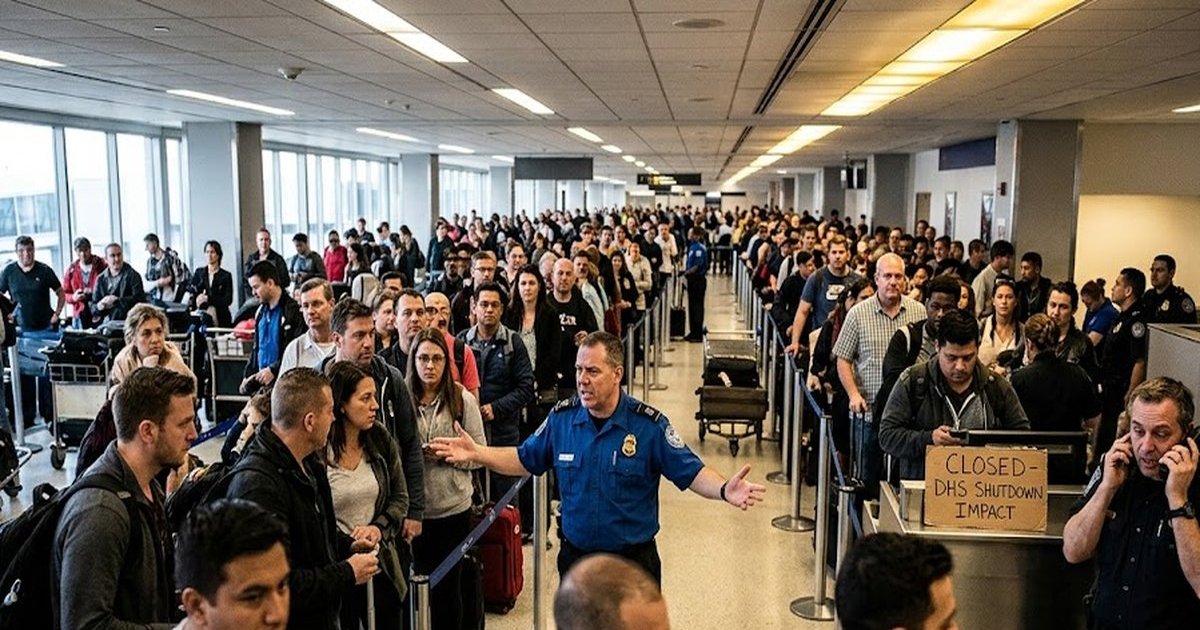
The impact on daily operations is immediate and severe. The nationwide call-out rate—unscheduled absences by frontline officers—has skyrocketed. Before the funding lapse, the TSA averaged a daily absence rate of about 2%. That number has surged past 10% nationally. At Houston’s Hobby Airport, call-out rates spiked to a staggering 55% on a single Saturday, effectively crippling the airport’s ability to screen passengers in a timely manner. Atlanta, New Orleans, and New York have all reported massive, double-digit spikes in unscheduled absences. You cannot secure an airport when half the security force is missing.
The Human Cost of Political Games
We must remember that behind every uniform is an American family struggling to survive this manufactured crisis. Aaron Barker, president of the American Federation of Government Employees (AFGE) Local 554 in Atlanta, recently laid bare the grim reality facing his union members. He noted that unlike other federal agencies that possess separate funding streams, TSA employees are entirely at the mercy of discretionary congressional appropriations.
Barker explained that many hardworking officers are now coping with eviction notices, vehicle repossessions, and empty refrigerators. It is an unconscionable betrayal to demand that federal law enforcement officers stand on their feet all day, keeping weapons and explosives off commercial aircraft, while they are simultaneously left wondering how they will feed their own children. Subjecting these men and women to the intense stress of missed mortgages and unpaid utility bills while they perform high-stakes national security duties is an unforced error of epic proportions.
What This Means for the Spring Break Surge
The timing of this politically manufactured crisis could not be worse for American families. The travel industry is currently bracing for one of the busiest spring break seasons on record, with an estimated 171 million passengers expected to take to the skies. Our aviation system is a finely tuned machine; it relies on predictability, adequate staffing, and swift security processing. When you remove a significant portion of the workforce from the equation, the entire system grinds to a halt.
We are already seeing the devastating results. Security wait times at major hubs like John F. Kennedy International Airport and Newark Liberty have frequently exceeded 100 minutes. For elderly travelers, mothers traveling with young children, or individuals with disabilities, standing in a stationary line for nearly two hours is not just an inconvenience—it is a severe physical hardship. Furthermore, the chief executives of major U.S. carriers, including Delta, American Airlines, and Southwest, have sent urgent letters to Capitol Hill, warning that the current operating environment is entirely unsustainable. When security checkpoints bottleneck, passengers miss their flights, airlines delay departures, and the logistical costs skyrocket.
The Devastating Economic Toll on Local Communities
When flights are delayed or canceled because a security checkpoint must close due to understaffing, the ripple effect is immediate and devastating. A family heading to Florida for spring break misses their connection. The hotel room sits empty. The rental car goes unused. The local restaurant loses a reservation. The U.S. Travel Association, led by President and CEO Geoff Freeman, recently sounded the alarm, estimating that a government shutdown of this magnitude costs the travel economy a staggering $1 billion every single week. These are not just abstract corporate losses; this is money drained directly out of the pockets of American small business owners.
History provides a grim warning of what happens when we let these shutdowns drag on. According to the Congressional Budget Office (CBO), the 35-day partial government shutdown spanning late 2018 and early 2019 slashed economic output by a massive $11 billion in the quarters that followed. Alarmingly, the CBO noted that $3 billion of that economic activity was permanently lost—never to be recovered by the U.S. economy.
Furthermore, the economic damage bleeds deep into the heartland. According to the Bureau of Labor Statistics, nearly 80% of federal workers live and work outside the Washington, D.C., area. When a TSA officer in Ohio or a Customs and Border Protection (CBP) agent in Texas misses a paycheck, that money instantly vanishes from the local economy. They skip their trip to the local grocery store, cancel family dinners at the neighborhood diner, and postpone home repairs. It is a slow, methodical strangulation of Main Street America.
National Security is Not a Bargaining Chip
Beyond the economic devastation and the travel headaches, this shutdown poses a grave threat to our national security. Former TSA Administrator John Pistole recently warned that this situation represents a “huge morale hit” and creates a dangerous opening for our enemies. Adversaries and bad actors constantly probe our defenses. When they look at American airports right now, they see exhausted, distracted, and financially stressed security officers. They see closed screening lanes and massive crowds of frustrated travelers backed up into unsecured terminal lobbies—soft targets that present a highly attractive opportunity for terrorists.
It is not just the TSA feeling the squeeze. CBP officers at our ports of entry are also classified as essential and forced to work without compensation. These are the men and women intercepting deadly fentanyl, human traffickers, and known gang members at our borders and international terminals. While passenger processing continues, the sheer strain on the system forces DHS to pull resources from discretionary and expedited processing, further slowing down legitimate trade and travel.
It is time for the political theater to end. Congress must immediately pass a clean funding bill for the Department of Homeland Security that fully supports all its agencies. Let us stand with the men and women on the frontlines, pay them the wages they have rightfully earned, and secure our skies once and for all.
Frequently Asked Questions
Are airports still open during the DHS shutdown?
Yes, airports remain open and operational. The government classifies TSA screeners, air traffic controllers, and CBP officers as essential personnel, meaning they must continue to work during the shutdown, even without pay.
Will the DHS shutdown delay my spring break travel?
It is highly likely. Severe staffing shortages caused by officers resigning or calling out sick have led to significantly longer security lines, with some airports reporting wait times exceeding 100 minutes. Travelers should plan to arrive at the airport much earlier than usual.
Do TSA and CBP agents eventually get paid?
Yes, federal law guarantees that furloughed and essential federal workers will receive back pay once the shutdown ends and Congress passes a funding bill. However, this does not help officers currently struggling to pay for immediate necessities like rent, food, and gas.
This article was produced with AI assistance and reviewed by a human editor for accuracy and clarity. For more about our editorial standards, visit our About page.