

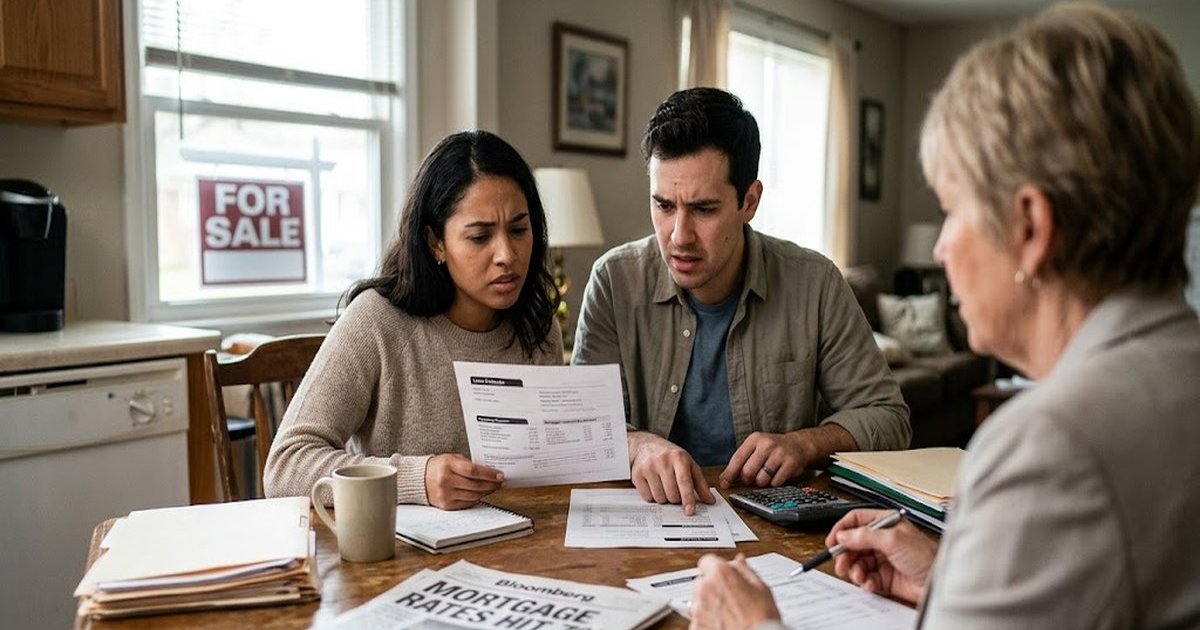
The New Reality for Mortgage Rates
Buying your first home? It can feel totally overwhelming, right? You’ve probably seen stories about mortgage rates hitting 7%. But what does that *really* mean for your day-to-day life?
For a few years, home buyers enjoyed borrowing money at rates around 3%. Those days are definitely gone. According to Freddie Mac, the average 30-year fixed mortgage rate recently climbed over 7%, before settling into the upper 6% range.
Simply put, borrowing money costs a lot more now. A higher interest rate means a higher monthly payment for the exact same house. Think about that—it forces you to rethink how much home you can actually afford.
Let’s look at the numbers. The National Association of Realtors reports that the national median price for a single-family home hit $414,900 in late 2025.
Imagine you’re buying a $400,000 home. You put down 20% in cash – that’s $80,000 – leaving you with a $320,000 loan. The interest rate is what determines your monthly bill.
At a 3% rate, your monthly payment for the loan itself is about $1,350. But at 7%? That same payment jumps to roughly $2,120. And that doesn’t even include taxes or insurance! That’s a lot of money.
Nearly $800 extra every month! Over the 30-year life of the loan, you’ll pay hundreds of thousands of dollars extra in interest alone. No kidding!
Why Home Prices Keep Climbing
You’re probably wondering why home prices haven’t dropped, right? Usually, when borrowing money gets pricier, home prices go down. But that’s not happening now.
The problem is a massive shortage of homes for sale. According to Realtor.com, almost 69% of American homes with a mortgage have an interest rate of 5% or lower. Many even have rates under 4%! Classic misdirection.
These homeowners don’t want to sell. Why? Because they’d lose their amazing mortgage rates. They’d have to buy a new home at today’s higher rates. So, they’re sticking where they are.
This creates a really tough shortage of homes on the market. With fewer homes to choose from, buyers are battling it out. That intense competition keeps home prices high.
‘2025 was another tough year for homebuyers, marked by record-high home prices and historically low home sales,’ said Lawrence Yun, chief economist for the National Association of Realtors.
The situation varies a lot depending on where you live. According to National Association of Realtors data, the Midwest is currently the most affordable region, with a median home price of $317,100.
But the Northeast? A totally different story. The median home price there surged to $514,600. Because of that, many families are moving to cheaper states just to find a place to live.
Balancing the Family Budget
These higher housing costs are putting a huge strain on family budgets. The U.S. Census Bureau states that the real median household income in the United States is $83,730 per year.
With that income, taking on a $2,120 monthly mortgage payment is a stretch, to say the least. If you want to keep your housing costs under 30% of your income—a good rule of thumb—you’re looking at a limit of roughly $2,090 a month.
The National Association of Realtors reports that the monthly mortgage payment on a typical single-family home, with a 20% down payment, was $2,057 in late 2025.
It’s pretty scary, honestly. This means the typical home now costs almost exactly what the typical family can afford, leaving zero wiggle room. Less money for groceries, gas, doctor’s appointments, and saving for retirement.
And your monthly payment isn’t just the loan itself. You also have to factor in property taxes and home insurance. Those are rising across the board, too.
Owning a home means you’re on your own when things break. No landlord to call! If the roof leaks, you pay to fix it. If the furnace quits in the winter? The bill’s on you.
You absolutely need a solid emergency fund. Before you buy, make sure you have extra cash saved up for those unexpected repairs. A good rule of thumb is to save 1% of the home’s value every year just for maintenance.
Do Not Forget the Hidden Costs
The down payment is just the beginning of your expenses. Buying a home comes with a bunch of extra fees that often surprise first-time buyers.
The Consumer Financial Protection Bureau notes that closing costs typically range from 2% to 5% of the home purchase price. On a $400,000 home, that’s an extra $8,000 to $20,000 in cash you’ll need just to close the deal.
These closing costs pay for some really important services, like lender fees, the home appraisal, and local taxes. You’ve gotta pay these fees on the day you buy the home.
A lot of people think you need a 20% down payment to buy a house. That’s a common misconception! Plenty of programs can help first-time buyers get into a home with much less cash.
The Federal Housing Administration (FHA) loans, for example, require as little as a 3.5% down payment. This program helps people who don’t have a ton of money saved up.
But there’s a catch with putting less money down. You’ll usually have to pay for mortgage insurance. The Consumer Financial Protection Bureau warns that mortgage insurance adds directly to your monthly costs.
And here’s why it’s important to understand: this insurance protects the *lender*, not you, in case you stop making payments. It’s an extra expense you need to include when you’re doing your monthly budget math.
Smart Steps for Today’s Market
Many buyers are wondering if they should just wait for mortgage rates to drop. It’s a personal decision, and waiting comes with its own risks.
Financial experts don’t expect rates to return to 3% anytime soon. If you wait, home prices might continue to climb, making homes even more expensive. It’s generally smarter to buy when you’re financially ready and can comfortably afford the payment at today’s rate.
But remember, you *can* change your mortgage rate later by refinancing. This involves taking out a new loan at a lower rate to pay off your old loan.
However, refinancing isn’t free. You’ll have to pay closing costs all over again. You should only buy a home if you can comfortably afford the payment at today’s interest rate.
If you want to buy a home soon, start prepping your finances now. The easiest way to get a lower interest rate is to have an excellent credit score.
Pay all your bills on time, every month. Pay down those credit card balances. Lenders look closely at how much debt you have compared to your income.
Shop around for a mortgage. Don’t just take the first offer from your local bank. Compare rates from credit unions, big banks, and online lenders to find the absolute best deal.
Finally, get pre-approved for a loan before you even start looking at houses. This tells you exactly how much the bank is willing to lend you. And it shows sellers that you’re a serious buyer who’s ready to make a move.
Frequently Asked Questions
Should I wait for mortgage rates to go back to 3%?
Financial experts don’t expect rates to return to 3% anytime soon. If you wait, home prices might continue to rise, making houses even more expensive. It’s generally smarter to buy when you’re financially ready and can afford the current monthly payment.
How much money do I really need for a down payment?
You don’t need a 20% down payment to buy a home. Programs like Federal Housing Administration (FHA) loans allow you to put down as little as 3.5%. However, a smaller down payment usually means you have to pay extra for monthly mortgage insurance.
Can I change my mortgage rate later?
Yes, you can lower your rate later by refinancing your mortgage. This involves taking out a new loan at a lower rate to pay off your old loan. Keep in mind that refinancing isn’t free and requires you to pay closing costs again.