
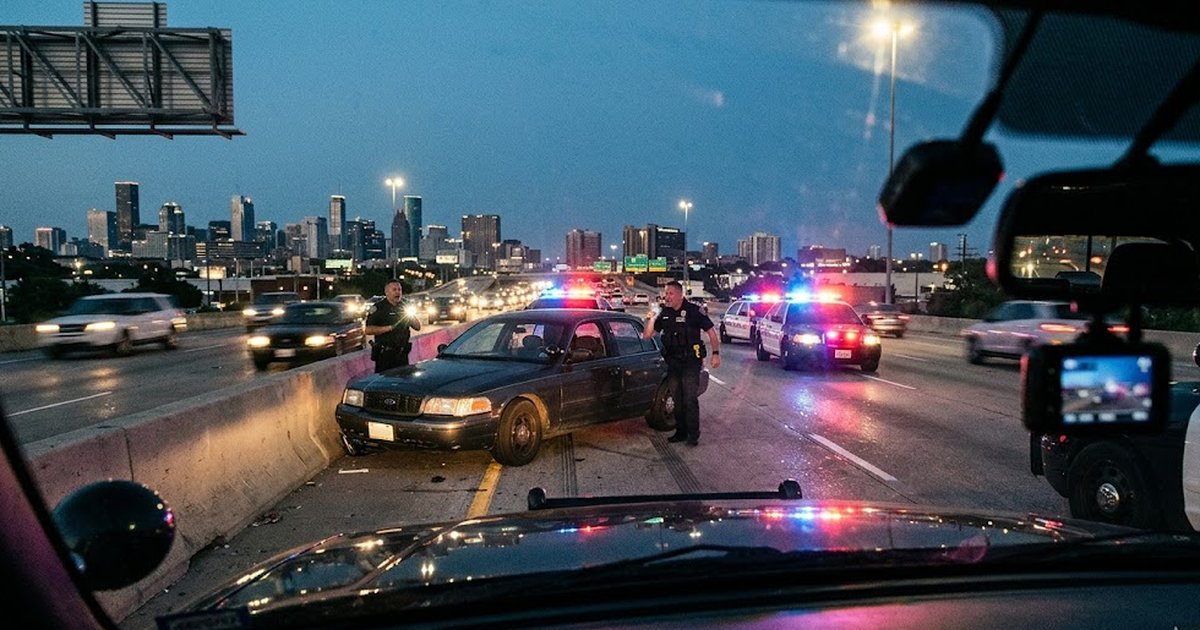
A dashcam captured a moment that stunned local residents. A vehicle, driven at high speed, swerves through a residential neighborhood. It nearly hits a stopped car. The driver doesn’t slow down. He doesn’t stop. He keeps going.
Police say the man was linked to a gang. They don’t name him in the release. But the video shows intent. Not panic. Not mistake. Intent.
And here’s the kicker: this wasn’t some random incident. It happened just after a traffic stop. Just after a confrontation. Just after a man who was not supposed to be in that car was seen fleeing.
Look at the footage. You can see his hands on the wheel. You can see the look in his eyes. No hesitation. No fear. Just motion.
That’s not a driver. That’s a threat.
Why This Matters to Families Like Yours
I saw that video last night. My daughter was in the car with me. She’s 14. She was in the passenger seat when we passed the same intersection. I didn’t know it was the same moment. I didn’t know the man in the video was driving less than a mile from where we were.
But I did know this: I felt my heart stop. Not because of the speed. Not because of the near-miss. But because of the look.
That look. I’ve seen it before. Not in a car. In a courtroom. In a police report. In the eyes of a man who knows he’s not supposed to be there.
And I asked myself: how many times has this happened? How many times has a mother or father been in that same car, not knowing their child was seconds from harm?
Because this isn’t just about one video. It’s about a pattern. A growing pattern of men who don’t slow down. Who don’t stop. Who don’t care.
And it’s not just about drivers. It’s about what happens when we let people think they’re untouchable.
Connections to Bigger Crises in Our Communities
Let’s be clear. This isn’t an isolated event. It’s part of a larger story.
Earlier this year, a man was shot by ICE agents in Northern California. The man was not a gang member, according to his fiancée. He was a father. A laborer. Just driving to work. But he was stopped. He was shot. And the video of that stop is now public.
That same week, a famous SoCal chef died in a crash. The cause is still under investigation. But the timing? It happened right after he left his restaurants. That’s not coincidence. That’s a pattern.
And then there’s the case of Catalina Corona. A personal assistant who stole $10 million from an elderly New York couple. She spent it on Louis Vuitton, Cartier, Gucci. And Apple merchandise. Millions gone. Just like that.
And let’s not forget the FedEx driver, Tanner Lynn Horner. He pleaded guilty to killing 7-year-old Athena Strand. Bodycam footage shows him saying she was dead when he stuffed her in his truck. He said it like it was nothing.
So what’s the thread? It’s not just crime. It’s not just violence. It’s the idea that some people believe they’re above the law.
And that belief? It spreads. It infects. It makes us all feel less safe.
Think about it. When a man drives like that, and no one stops him — what message does that send?
And when a woman steals $10 million and walks away with a Louis Vuitton bag — what message does that send?
It’s not just about the crime. It’s about the culture that lets it happen.
The System Isn’t Working — And It’s Time to Fix It
Right now, we’re in a moment where accountability is slipping. Where consequences are being delayed. Where people think they can break the rules and walk away.
Paul Randall, 66, pleaded guilty to wire fraud. He stole over $178 million in Medi-Cal funds. That’s taxpayer money. That’s money meant for the sick. The elderly. The kids. And he used it for his own gain.
And yet — he’s still out. He’s still free. He’s still walking around.
That’s not justice. That’s not safety.
And here’s the bottom line: when we let people like that go, we send a message. A message that says: you can take what’s not yours. You can break the rules. You can drive like a maniac. And still walk free.
But that’s not what America is supposed to be. We’re not a country that rewards recklessness. We’re not a nation that lets criminals walk.
And we’re not a people who stand by while our families are put at risk.
So what do we do?
First, we demand better. We demand that police respond faster. That prosecutors act quicker. That courts don’t let cases drag on for years.
Second, we hold the system accountable. Not just the people who break the law. But the people who let them break it.
And third — we watch. We stay alert. We don’t look away. Because if we do, someone else’s child could be next.
What You Can Do — Right Now
I’m not asking you to fear. I’m not asking you to panic. But I am asking you to be aware.
Next time you’re in your car, look around. Watch for drivers who don’t slow down. Who don’t stop at red lights. Who don’t signal. Who drive like they’re in a hurry to get somewhere — but don’t seem to know where.
And if you see something? Say something.
Call your local police. File a report. Don’t wait. Don’t assume someone else will. Because someone has to.
And if you’re a parent — talk to your kids. Teach them to recognize danger. Not just from strangers. But from the way people drive. The way they act. The way they look.
Because safety isn’t just about laws. It’s about awareness. It’s about courage. It’s about standing up.
And it’s about making sure no one else has to see what I saw on that dashcam.
Final Thoughts — From One Mother to Another
I’ve spent years teaching my daughter to be careful. To look both ways. To wait for the light. But I never thought I’d have to teach her to watch for the driver who doesn’t care.
That video wasn’t just footage. It was a warning.
And I’m telling you — if we don’t act, more families will be in that car. More kids will be in that line. More lives will be changed.
But if we do act? If we demand better? If we stay alert?
Then maybe — just maybe — the next dashcam won’t show a man fleeing. It’ll show a man stopped. Held accountable. And safe.
That’s not a dream. That’s a responsibility.
And it’s one we all share.
FAQ:
Q: What does the dashcam video show exactly?
A: The video shows a vehicle speeding through a residential area, swerving near another car, and not slowing down after a traffic stop. Police say the driver is linked to a gang, though his name is not released in the public report.
Q: How does this case connect to other recent incidents?
A: It connects to cases like the shooting of a man by ICE agents in Northern California, the death of a SoCal chef in a crash, and the $10 million theft by personal assistant Catalina Corona, all of which highlight growing concerns about accountability and safety in communities.
Q: What can ordinary people do to help?
A: Report suspicious driving behavior to local police. Talk to your children about recognizing danger. Stay alert and don’t wait for someone else to act. Small steps can make a big difference in keeping families safe.
KEY_TAKEAWAYS:
- Dashcam footage shows a man driving recklessly after a traffic stop, raising concerns about public safety and accountability.
- Recent cases — including the ICE shooting in Northern California and the $10 million theft by Catalina Corona — reveal a pattern of broken trust and delayed consequences.
- Every American has a role in staying alert, reporting danger, and demanding faster, fairer justice for all families.
— Rachel Dunn
This article was produced with AI assistance and reviewed by our editorial team.