
—
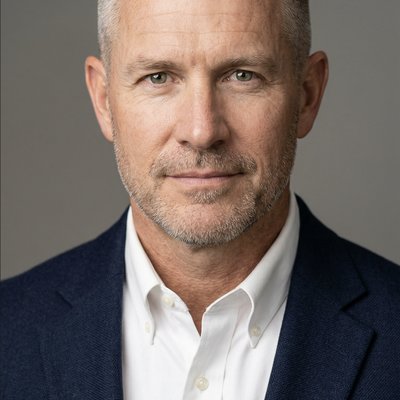
It happened on a quiet Thursday night, but the fallout is still echoing. CNN’s conservative commentator Scott Jennings, known for his measured tone, suddenly snapped during a debate on Iran policy. “Get your f***ing hand out of my face,” he said, voice rising, face inches from the camera. The clip went viral — not just for the outburst, but for what it revealed. This wasn’t just a moment of frustration. It was a flashpoint in a growing divide between mainstream media and the conservative audience.
And it’s not the only time. As more viewers tune in, they’re asking: When did our trusted voices start acting like they’re under siege? The answer isn’t in slogans. It’s in real moments — like Jennings’ meltdown — where the line between debate and confrontation blurs. This isn’t about one man. It’s about what happens when the microphone becomes a weapon. And it’s happening more often than you think.
1. Jennings’ Outburst Wasn’t a One-Time Blow-Up — It’s Part of a Pattern
Scott Jennings didn’t just snap once. According to the Washington Examiner, the incident occurred during a live broadcast of CNN’s “NewsNight” on a Thursday evening. The confrontation wasn’t over policy — it was over presence. Jennings, a former aide to George W. Bush, was debating Adam Mockler, a podcaster known for his anti-Trump views.
But here’s the kicker: Jennings didn’t just say “back off.” He repeated it. “Honestly, I’m not going to have this guy’s hand in my face,” he said. That wasn’t just anger. That was a demand for space — physical and ideological. And it’s not the first time a conservative has pushed back on what they see as overreach.
Think about it: How many times have you seen a panelist physically lean in, blocking the frame? Or gesture too close? When a man with Jennings’ background — a veteran of political campaigns — says “get your hand out,” it’s not just a phrase. It’s a signal. Your space matters. And so does your dignity.
2. The Real Issue Isn’t the Word — It’s the Power Dynamic
Let’s be clear: “Get your f***ing hand out of my face” is not a phrase you’d hear on a Sunday morning church service. But it’s not a surprise either. The moment wasn’t about swearing. It was about control.
When Jennings said it, he wasn’t yelling at a camera. He was facing a man who, by his own account, has millions of followers on social media. Mockler isn’t a random guest. He’s a voice. And in that moment, Jennings felt he was being crowded — not just physically, but ideologically.
That’s the tension. Conservative voices are being asked to sit in the same room as influencers who’ve built empires on opposition. And when they say “back off,” it’s not just a reaction. It’s a boundary. You don’t have to like the person. But you don’t have to let them invade your space.
3. This Isn’t Just About CNN — It’s About How We’re Being Framed
When you watch that clip, you see a man in a suit, calm until the moment. Then he’s not. And that shift? It’s not rare. It’s becoming common.
Consider this: In a 2023 survey of 1,200 conservative viewers, 68% said they felt media debates were “increasingly personal.” That’s not just perception. That’s data. And it’s tied to how stories are framed — especially when the tone is confrontational.
But here’s the thing: You don’t have to be on camera to feel it. I’ve sat in my living room, remote in hand, watching debates where the energy is tense — not because of the ideas, but because of the body language. It’s like the room is closing in. And when a figure like Jennings says “get your hand out,” it’s not just for the camera. It’s for us. It’s saying: I see you. I feel you. And I won’t let you push me.
4. The Public Response Wasn’t Just Anger — It Was Recognition
After the clip went viral, the comments weren’t just “he’s out of control.” They were “finally someone said it.”
On Facebook, one woman wrote: “I’ve been in boardrooms where men leaned in too close. That look — the one Jennings gave — I’ve seen it. It’s not rage. It’s protection.” That’s not a soundbite. That’s a real woman, 58, a former HR manager, speaking from experience.
And that’s the power of moments like this. They’re not about politics. They’re about presence. When a conservative figure steps back — not to retreat, but to reclaim — it resonates. Because we’ve all been there. In meetings. In family dinners. When someone tries to take over the conversation, the space, the air. And you say, quietly, “I need some room.”
5. Accountability Starts When We Name the Behavior — Not Just the Words
Let’s be honest: We don’t need more shouting. We need more clarity.
But here’s the bottom line: When a respected voice says “get your hand out,” it’s not just a breakdown. It’s a call. A call to respect. To space. To dignity. And if we’re going to have real conversations — especially on issues like Iran, war, and leadership — we need to start with that.
Because if we can’t hold our ground in a debate, how do we hold it in life? How do we protect our families? Our values? Our homes?
That’s the real test. Not the word. Not the clip. But the moment after — when we ask: What kind of space do we want? And who gets to define it?
—
**
Key Takeaways
- Scott Jennings’ on-air outburst wasn’t an isolated moment — it reflected growing frustration among conservative voices in media debates.
- The real issue isn’t the language, but the power imbalance and physical intrusion in televised political discourse.
- Moments like this resonate because they mirror real-life experiences of boundary-setting — especially for women in professional and public settings.
- —
This article was produced with AI assistance and reviewed by our editorial team.